SardinhaNews
Threat intelligence · CVEs & news · updated 09/10, 06:50 PM
Monthly trends
New CVEs published
count per month
Monthly count of newly published CVEs in the NVD (National Vulnerability Database). The 3-month moving average filters month-to-month noise. Growth accelerated: +19% from 2024 to 2025 and +65% from 2025 to 2026 (Jan–Jul). We deliberately do not fit an exponential curve — it explains barely more than a straight line (R² 0.61 vs 0.57) and would imply a constant rate the data does not show.
CVEs by EPSS band
count per month, by exploitation probability
Each CVE is classified by its probability of exploitation within the next 30 days (EPSS/FIRST). Almost all new CVEs sit below 1% — the growing publication volume obscures the real risk, which concentrates in the red line (≥10%).
CVEs by CVSS band
count per month, by severity
Distribution by CVSS severity: low (<4.0), medium (4.0–6.9), high (7.0–8.9) and critical (≥9.0). Severity measures potential impact, not attack likelihood.
CISA KEV additions
latest: 31CVEs added per month
CVEs added to the KEV catalog by CISA (the US cybersecurity agency) — confirmed active exploitation in real attacks; US federal agencies are required to patch them within set deadlines.
Withdrawn or disputed records
% of those published that month (absolute in tooltip)
Rejected = the CVE Program voided the record (not a vulnerability, a duplicate, or the requester withdrew). Disputed = still published, but someone — usually the vendor — denies it is a flaw. The rate swings a lot and has been trending down: 6.9% of CVEs published in 2023, 1.8% in 2024, 3.6% in 2025 and 3.0% in 2026. Isolated peaks are usually batches — in Jan 2026, 838 records were voided at once, most of them 2025 CVEs. The chart has its own scale because these are few cases next to the total volume.
Trending CVEs (last 7 days)
Ranked by a weighted score of the last 7 days' events: added to a confirmed-exploitation catalogue (+10 — CISA KEV or EUVD/ENISA, counted only once), EPSS spike (+8), first media mention (+5), CVSS change (+2), new mentions (+1) and new CVE (+1). Bonuses add current CVSS and EPSS plus confirmed weaponization: ransomware (+4), CERT.br notification (+4), public exploit (+3 — Metasploit or Exploit-DB, counted only once), APT groups (+2) and malware (+2).
Sources:NVDEPSS (FIRST)CISA KEVEUVD (ENISA)CISA Vulnrichment (SSVC)Tenable (VPR)CERT.brCTIR GovMetasploitExploit-DBNucleiBDU/FSTECCloudflare RadarCERT.br honeypotsransomware.live
Type confusion in V8 in Google Chrome prior to 152.0.7977.82 allowed a remote attacker to execute arbitrary code inside the sandbox via a crafted HTML page. (Chromium security severity: High)
A vulnerability in the web interface of Cisco Secure Firewall Management Center (FMC) Software could allow an unauthenticated, remote attacker to bypass authentication and execute script files on an affected device to obtain root access to the underlying operating system. This vulnerability is due to an improper system process that is created at boot time. An attacker could exploit this vulnerability by sending crafted HTTP requests to an affected device. A successful exploit could allow the attacker to execute a variety of scripts and commands that allow root access to the device.
Heap-based buffer overflow in Windows ALPC allows an authorized attacker to elevate privileges locally.
Huawei HG532 with some customized versions has a remote code execution vulnerability. An authenticated attacker could send malicious packets to port 37215 to launch attacks. Successful exploit could lead to the remote execution of arbitrary code.
N-central is vulnerable to a pre-auth remote code execution This issue affects N-central: before 2026.3.1.14.
RouterOS contains an argument-handling flaw in the SSH login path involving usernames that begin with a prohibited character, allowing for the trusted RouterOS policy mask to be changed, leading to privilege escalation. Exploitation requires an unauthenticated SSH session to reach the RouterOS login helper.This issue was fixed in versions: 6.49.21 (Long-term), 7.23.4 (Long-term) and 7.24.2 (Stable)
Adobe Commerce is affected by an Improper Neutralization of Special Elements Used in a Template Engine vulnerability that could result in arbitrary code execution in the context of the current user. An attacker could exploit this vulnerability to execute arbitrary code. Exploitation of this issue does not require user interaction. Scope is changed.
A heap-based buffer overflow vulnerability in Fortinet FortiOS 7.6.0 through 7.6.3, FortiOS 7.4.0 through 7.4.8, FortiOS 7.2.0 through 7.2.11, FortiOS 7.0.0 through 7.0.17, FortiOS 6.4 all versions, FortiSwitchManager 7.2.0 through 7.2.6, FortiSwitchManager 7.0.0 through 7.0.5 allows attacker to execute unauthorized code or commands via specially crafted packets
RouterOS does not compare the complete RSA public key when matching an SSH authentication request to an authorized user key, checking the key type and modulus but omitting the exponent. Because signature verification uses the client-supplied key, an attacker knowing an authorized RSA modulus can supply a key with exponent one, forge a valid signature, and open an SSH command channel as the target user without the private key.This issue affects only 7.x branch was fixed in versions: 7.23.4 (Long-term) and 7.24.2 (Stable)
More CVEs (39)
Out of bounds write in V8 in Google Chrome prior to 153.0.8010.36 allowed a remote attacker to execute arbitrary code inside the sandbox via a crafted HTML page. (Chromium security severity: Medium)
Improper link resolution before file access ('link following') in Windows Update Stack allows an authorized attacker to elevate privileges locally.
A vulnerability in the Secure Sockets Layer (SSL) VPN functionality of the Cisco Adaptive Security Appliance (ASA) Software could allow an unauthenticated, remote attacker to cause a reload of the affected system or to remotely execute code. The vulnerability is due to an attempt to double free a region of memory when the webvpn feature is enabled on the Cisco ASA device. An attacker could exploit this vulnerability by sending multiple, crafted XML packets to a webvpn-configured interface on the affected system. An exploit could allow the attacker to execute arbitrary code and obtain full control of the system, or cause a reload of the affected device. This vulnerability affects Cisco ASA Software that is running on the following Cisco products: 3000 Series Industrial Security Appliance (ISA), ASA 5500 Series Adaptive Security Appliances, ASA 5500-X Series Next-Generation Firewalls, ASA Services Module for Cisco Catalyst 6500 Series Switches and Cisco 7600 Series Routers, ASA 1000V Cloud Firewall, Adaptive Security Virtual Appliance (ASAv), Firepower 2100 Series Security Appliance, Firepower 4110 Security Appliance, Firepower 9300 ASA Security Module, Firepower Threat Defense Software (FTD). Cisco Bug IDs: CSCvg35618.
RouterOS accepts a "related" btest connection before the corresponding primary session has completed authentication. An unauthenticated client can use this state to start an IPv4 UDP test. With "random-data=false", the sender transmits an uninitialized tail from a kernel packet buffer. A separate unchecked, inverted packet-size interval causes unsigned integer underflow, anomalously large fragmented output, and can restart the RouterOS kernel. This issue was fixed in versions: 6.49.21 (Long-term), 7.23.4 (Long-term) and 7.24.2 (Stable)
A template injection vulnerability exists in Sawtooth Software’s Lighthouse Studio versions prior to 9.16.14 via the ciwweb.pl http://ciwweb.pl/ Perl web application. Exploitation allows an unauthenticated attacker can execute arbitrary commands.
Metabase allows a remote, unauthenticated attacker to inject arbitrary SQL via the '/reset_password' database endpoint and gain administrator access to the connected Metabase instance.
Vulnerability in NetScaler ADC and NetScaler Gateway. This issue affects ADC: from 14.1 through 73.32 and from 13.1 through 63.21; Gateway: from 14.1 through 73.32 and from 13.1 through 63.21.
An Out-of-bounds Write vulnerability in the WatchGuard Fireware OS iked process may allow a remote unauthenticated attacker to execute arbitrary code. This vulnerability affects both the mobile user VPN with IKEv2 and the branch office VPN using IKEv2 when configured with a dynamic gateway peer. If the Firebox was previously configured with the mobile user VPN with IKEv2 or a branch office VPN using IKEv2 to a dynamic gateway peer, and both of those configurations have since been deleted, that Firebox may still be vulnerable if a branch office VPN to a static gateway peer is still configured.
MCPJam inspector is the local-first development platform for MCP servers. Versions 1.4.2 and earlier are vulnerable to remote code execution (RCE) vulnerability, which allows an attacker to send a crafted HTTP request that triggers the installation of an MCP server, leading to RCE. Since MCPJam inspector by default listens on 0.0.0.0 instead of 127.0.0.1, an attacker can trigger the RCE remotely via a simple HTTP request. Version 1.4.3 contains a patch.
Active Directory Domain Services Elevation of Privilege Vulnerability
An authentication bypass vulnerability in the CGI program of Zyxel USG/ZyWALL series firmware versions 4.20 through 4.70, USG FLEX series firmware versions 4.50 through 5.20, ATP series firmware versions 4.32 through 5.20, VPN series firmware versions 4.30 through 5.20, and NSG series firmware versions V1.20 through V1.33 Patch 4, which could allow an attacker to bypass the web authentication and obtain administrative access of the device.
D-Link DIR-820L 1.05B03 was discovered to contain remote command execution (RCE) vulnerability via HTTP POST to get set ccp.
Active Directory Domain Services Elevation of Privilege Vulnerability
IBM Langflow OSS 1.0.0 through 1.10.0 allows unauthenticated attackers to chain /api/v1/auto_login (mints SUPERUSER tokens to any network caller) with /api/v1/validate/code (executes user code via exec()) to achieve full RCE on default Langflow deployments
In the Linux kernel, the following vulnerability has been resolved: crypto: algif_aead - Revert to operating out-of-place This mostly reverts commit 72548b093ee3 except for the copying of the associated data. There is no benefit in operating in-place in algif_aead since the source and destination come from different mappings. Get rid of all the complexity added for in-place operation and just copy the AD directly.
A Stack-based buffer overflow vulnerability in the SonicOS via HTTP request allows a remote unauthenticated attacker to cause Denial of Service (DoS) or potentially results in code execution in the firewall.
A remote code execution vulnerability exists in Zimbra Collaboration (ZCS) before 10.1.20 when the optional zimbra-snmp package is installed and SNMP notifications are enabled. Due to improper sanitization of untrusted input during SNMP notification processing, an unauthenticated attacker can send specially crafted SMTP requests that may result in execution of arbitrary operating system commands as the Zimbra user.
A buffer overflow issue was addressed with improved memory handling. This issue is fixed in iOS 16.6.1 and iPadOS 16.6.1, macOS Monterey 12.6.9, macOS Ventura 13.5.2, iOS 15.7.9 and iPadOS 15.7.9, macOS Big Sur 11.7.10. Processing a maliciously crafted image may lead to arbitrary code execution. Apple is aware of a report that this issue may have been actively exploited.
Post-authentication Improper Neutralization of Special Elements used in an OS Command ('OS Command Injection') vulnerability has been identified in the SMA1000 Appliance Management Console (AMC) which in specific conditions could potentially enable a remote authenticated attacker as administrator to execute arbitrary OS commands, resulting in remote code execution.
Starlette is a lightweight ASGI framework/toolkit. Prior to version 1.0.1, the HTTP `Host` request header was not validated before being used to reconstruct `request.url`. Because the routing algorithm relies on the raw HTTP path while `request.url` is rebuilt from the `Host` header, a malformed header could make `request.url.path` differ from the path that was actually requested. Middleware and endpoints that apply security restrictions based on `request.url` (rather than the raw `scope` path) could therefore be bypassed. Users should upgrade to a version greater than or equal to version 1.0.1, which validates the `Host` header against the grammar of RFC 9112 §3.2 / RFC 3986 §3.2.2 when constructing `request.url` and falls back to `scope["server"]` for malformed values.
An Out-of-bounds Write vulnerability in the WatchGuard Fireware OS iked process may allow a remote unauthenticated attacker to execute arbitrary code. This vulnerability affects both the mobile user VPN with IKEv2 and the branch office VPN using IKEv2 when configured with a dynamic gateway peer. If the Firebox was previously configured with the mobile user VPN with IKEv2 or a branch office VPN using IKEv2 to a dynamic gateway peer, and both of those configurations have since been deleted, that Firebox may still be vulnerable if a branch office VPN to a static gateway peer is still configured.
An unauthenticated SQL injection vulnerability exists in Sangoma Switchvox SMB Edition 8.3 (104997). The /pa endpoint processes XML content beginning with <PolycomIPPhone> and directly concatenates the user-controlled PhoneIP value into PostgreSQL queries without sanitization or parameterization. An unauthenticated remote attacker can execute arbitrary SQL statements against the backend PostgreSQL database using a single crafted request, including database operations and remote code execution.
Use after free in CSS in Google Chrome prior to 145.0.7632.75 allowed a remote attacker to execute arbitrary code inside a sandbox via a crafted HTML page. (Chromium security severity: High)
An authentication bypass in N-central < 2026.3 HF 3 leads to authentication bypass in internal only APIs
GeoNetwork is a catalog application to manage spatially referenced resources. Prior to versions 4.4.12 and 4.2.17, the Saxon XSLT processor used to render formatters is configured without secure processing (`FEATURE_SECURE_PROCESSING`) and without disabling Java extension functions (`ALLOW_EXTERNAL_FUNCTIONS`). Any stylesheet loaded by GeoNetwork can therefore invoke `java.lang.Runtime.exec()` or `java.lang.ProcessBuilder` directly, achieving arbitrary command execution as the GeoNetwork process user. A user with sufficient privileges to upload a formatter can deliver a `.xsl` file containing Java extension call that execute arbitrary OS commands with the privileges of the GeoNetwork process. The issue is patched in GeoNetwork versions 4.4.12 and 4.2.17.
A vulnerability in the N-central internal API access control filter allows unauthorised access to internal APIs. This is fixed in N-central 2026.3 HF3 and 2026.4
GeoNetwork is a catalog application to manage spatially referenced resources. Prior to versions 4.4.12 and 4.2.17, the API endpoint for creating a new formatter via file upload is unprotected and allows the upload of external uncontrolled files. An unauthenticated attacker can upload arbitrary `.xsl` or `.zip` formatter files to the server. An unauthenticated attacker can write arbitrary files into the GeoNetwork formatter directory. On its own this constitutes unauthorized write access to server storage. The issue is patched in GeoNetwork versions 4.4.12 and 4.2.17.
A memory safety vulnerability exists in the Extended Passport Protocol (EPP) processing library. Under specific conditions, an unauthenticated attacker could exploit a crafted network request containing a malformed EPP header, potentially resulting in undefined behavior and abnormal program termination. Successful exploitation may have a high impact on the confidentiality, integrity, and availability of the application.
SAP NetWeaver Message Server does not sufficiently validate the authenticity of internal application server components during registration. An unauthenticated attacker with network access to the affected service could exploit this weakness to register an unauthorized component and potentially perform unauthorized actions within the application environment, resulting in a high impact on the confidentiality, integrity, and availability of the affected system.
In JetBrains TeamCity before 2025.03 stored XSS was possible on Cloud Profiles page
A vulnerability in the web interface of Cisco Secure Firewall Management Center (FMC) Software could allow an unauthenticated, remote attacker to log in to an affected device using a low-privileged account to access sensitive data within the impacted systems. This vulnerability is due to the presence of static user credentials for a low-privileged account. An attacker could exploit this vulnerability by using the account to log in to an affected system. A successful exploit could allow the attacker to log in to the affected system and access sensitive data as the low-privileged user. Note: If the FMC management interface does not have public internet access, the attack surface that is associated with this vulnerability is reduced. Cisco has assigned this security advisory a Security Impact Rating (SIR) of High rather than Medium as the score indicates. The reason is that this vulnerability can be used with other Cisco Secure FMC Software vulnerabilities to elevate privileges.
Inappropriate implementation in V8 in Google Chrome prior to 146.0.7680.75 allowed a remote attacker to execute arbitrary code inside a sandbox via a crafted HTML page. (Chromium security severity: High)
Out of bounds write in Skia in Google Chrome prior to 146.0.7680.75 allowed a remote attacker to perform out of bounds memory access via a crafted HTML page. (Chromium security severity: High)
An unsafe dynamic class loading vulnerability exists in the database connection utilities of PaperCut MF and PaperCut NG. The application instantiates database driver classes based on configurable driver names without validating against an allowlist of approved drivers. If an attacker can manipulate system configuration parameters, this enables the execution of arbitrary Java bytecode residing on the application classpath under the security context of the PaperCut server process.
@sap/cds-mtxs NPM library does not perform sufficient checks on certain functionality used in multitenant CAP applications with extensibility enabled. An unauthenticated attacker could send specially crafted requests to obtain sensitive credentials and abuse them to replace or delete tenant data. Successful exploitation can result in a high impact on availability and integrity of the application. There may also be partial impact to the confidentiality of business data.
An improper access control vulnerability exists in the web management interface of PaperCut MF and PaperCut NG. Under specific conditions, unauthenticated remote requests targeting administrative functions can trigger backend actions prior to the completion of access validation checks. This allows an unauthenticated remote attacker to modify certain system configurations.
SAP GUI for Java does not correctly enforce the trust level policy for certain functions invoked from a connected backend system. A low-privileged attacker could exploit this weakness by manipulating a connected backend system to trigger affected functionality. This could allow arbitrary command execution on the victim's machine, leading to a high impact on the confidentiality, integrity, and availability of the affected system.
RouterOS WebFig contains an unauthenticated file-read vulnerability in the /jsproxy path where a newly allocated session retains a stale uninitialized principal pointer used for file authorization. An unauthenticated attacker can prepare the allocator so that the file-serving path dereferences this pointer with sufficient rights, then supply parent-directory components in an encrypted URI to escape the WebFig file namespace and disclose root-owned files, including configuration stores containing credentials.This issue affects only 7.x branch was fixed in versions: 7.23.4 (Long-term) and 7.24.2 (Stable)
A Deserialization of Untrusted Data vulnerability in Ivanti Neurons for ITSM before 2026.2 allows a remote unauthenticated attacker to execute arbitrary code on the server.
Recent zero-days
_Andriy_Popov_Alamy.png?width=720&quality=80&disable=upscale)
Nightmare-Eclipse Strikes Again with 'ShieldCrash' Windows Exploit
The disgruntled researcher continued their vendetta against Microsoft by publishing yet another zero-day exploit for Windows Defender.

New 'BlueMoon' kit exploited Windows and Chrome zero-day flaws
Multiple cyber-espionage groups deployed an exploit kit dubbed "BlueMoon" that leveraged zero-day vulnerabilities in Microsoft Windows and Google Chrome. [...]
CISA Adds Two Known Exploited Vulnerabilities to Catalog
CISA has added two new vulnerabilities to its Known Exploited Vulnerabilities (KEV) Catalog , based on evidence of active exploitation. CVE-2026-67277 MikroTik RouterOS Missing Authentication for Critical Function Vulnerability CVE-2026-86060 MikroTik RouterOS Improper Neutralization of Argument Delimiters in a Command Vulnerability These types of vulnerabilities are a frequent attack vector for malicious cyber actors and pose significant risks to the federal enterprise. Binding Operational Directive (BOD) 26-04: Prioritizing Security Updates Based on Risk establishes vulnerability management requirements for Federal Civilian Executive Branch (FCEB) agencies. BOD 26-04 reinforces the importance of the KEV Catalog and requires federal agencies to prioritize rapid remediation of high-risk vulnerabilities, specifically those identified by Common Vulnerabilities and Exposures (CVEs) listed in CISA’s KEV Catalog on publicly exposed assets that grant total control of the asset post-exploitation, while deferring action for lower-risk vulnerabilities. BOD 26-04 further establishes basic expectations for when agencies must check whether threat actors compromised the system before the patch was applied. While BOD 26-04 applies only to FCEB agencies, CISA encourages all organizations to adopt risk-based vulnerability management and prioritize remediation of KEV Catalog vulnerabilities . CISA will continue to add vulnerabilities to the catalog that meet the specified criteria . Aware of an exploited vulnerability not currently listed in the KEV Catalog? Submit it for potential addition through CISA’s KEV Nomination Form . Potential KEV additions must have a CVE ID, evidence of exploitation, and clear mitigation guidance.

Cisco FMC bugs exploited by nation-state and ransomware actors (CVE-2026-20079, CVE-2026-20316)
State-sponsored and financially-motivated attackers are actively exploiting CVE-2026-20079, a critical authentication bypass vulnerability in Cisco Secure Firewall Management Center (FMC), which is used for centrally managing multiple Cisco Secure Firewall devices across a network. Two FMC vulnerabilities under active attack “Cisco Talos is actively tracking the exploitation of two vulnerabilities in Cisco’s Secure Firewall Management Center (FMC) Software,” the company’s researchers confirmed on Wednesday. These are the above mentioned CVE-2026-20079 and CVE-2026-20316, which Cisco flagged … More → The post Cisco FMC bugs exploited by nation-state and ransomware actors (CVE-2026-20079, CVE-2026-20316) appeared first on Help Net Security .
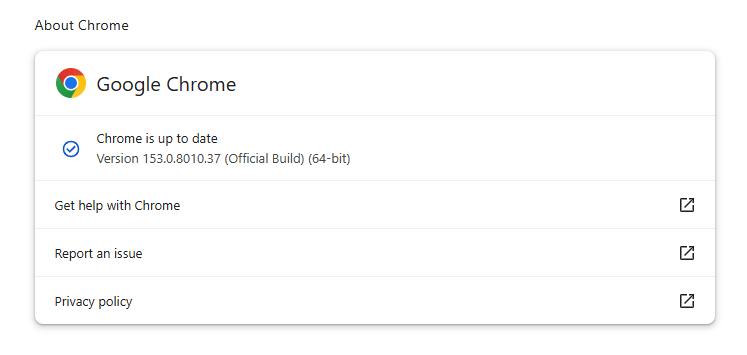
Update Chrome now to protect against an actively exploited vulnerability
Chrome issues another monster update, fixing an actively exploited V8 vulnerability and 229 other flaws.

New ‘ShieldCrash’ Zero-Day Exploit Targets Microsoft Defender
The exploit provides full System privileges on Windows machines running the September 2026 patches. The post New ‘ShieldCrash’ Zero-Day Exploit Targets Microsoft Defender appeared first on SecurityWeek .
More news (94)
Skullcandy Dime 3 earbuds expose users to Bluetooth hijacking
The Carnegie Mellon University CERT Coordination Center (CERT/CC) is warning that Skullcandy Dime 3 wireless earbuds accept Bluetooth pairing requests from nearby unpaired devices without requiring user interaction. [...]

Novo exploit para zero-day no Windows Defender
O pesquisador de segurança conhecido como MSNightmare publicou um código de prova de conceito (PoC) para uma vulnerabilidade de dia zero no Windows Defender, denominada “ShieldCrash”. Segundo a publicação no GitHub, a falha permite a leitura arbitrária de arquivos com privilégios de sistema em todas as versões suportadas do Windows, incluindo as totalmente atualizadas com os patches […]

Chrome V8 Zero-Day Exploited in the Wild Enables Code Execution Inside Sandbox
Google on Thursday released updates to patch 230 security vulnerabilities, including one that has come under active exploitation in the wild. The medium-severity vulnerability, assigned the CVE identifier CVE-2026-87491 (CVSS score: N/A), has been described as an out-of-bounds bug in V8, Chrome's JavaScript and WebAssembly engine. "Out-of-bounds write in V8 in Google Chrome prior to

Google fixes yet another actively exploited Chrome zero-day (CVE-2026-87491)
Google has fixed 230 vulnerabilities in Chrome, including a zero-day flaw, CVE-2026-87491, with an in-the-wild exploit. “Google is aware that an exploit for CVE-2026-87491 exists in the wild,” the company said in a Tuesday security advisory. The fix has been shipped in Chrome 153.0.8010.36 and .37 for Windows and macOS and Chrome 153.0.8010.36 for Linux. About CVE-2026-87491 CVE-2026-87491, rated Medium severity, is an out of bounds write bug in V8, Chrome’s JavaScript and WebAssembly engine, … More → The post Google fixes yet another actively exploited Chrome zero-day (CVE-2026-87491) appeared first on Help Net Security .

New Microsoft Defender 'ShieldCrash' zero-day grants SYSTEM access
An anonymous security researcher known as Nightmare Eclipse has released a new Microsoft Defender zero-day exploit named "ShieldCrash" right after Microsoft rolled out its September 2026 Patch Tuesday security updates. [...]

Researcher Drops New Microsoft Defender PoC Showing ShieldBreak Patch Can Be Bypassed
The security researcher known as Chaotic Eclipse has dropped a proof-of-concept (PoC) for yet another zero-day in Microsoft Defender. The vulnerability, codenamed ShieldCrash, is assessed to be a patch bypass for CVE-2026-69414 (CVSS score: 7.8), also called ShieldBreak, which the researcher reported last month. "Microsoft has failed to properly patch ShieldBreak CVE-2026-69414," Chaotic

Adobe lança correção para zero-day crítico no Magento
A Adobe publicou hoje uma correção emergencial para a vulnerabilidade CVE-2026-75650, um zero-day de gravidade máxima que afeta múltiplas versões do Magento e do Adobe Commerce. A falha, batizada de “StyleSmuggler” pela empresa de segurança Sansec, está sendo explorada ativamente em ataques desde pelo menos 4 de setembro para instalar um backdoor em servidores vulneráveis. […]

Adobe Patches Over 170 Vulnerabilities, Including Commerce Zero-Day
Tracked as CVE-2026-75650, the exploited defect allows unauthenticated attackers to execute arbitrary code. The post Adobe Patches Over 170 Vulnerabilities, Including Commerce Zero-Day appeared first on SecurityWeek .

Liquid Hackers Return 3,400 Bitcoin Taken via Elements Bug, Still Holding $47M in BTC
Whoever took nearly 4,000 bitcoin from the Liquid Network on Sunday, September 6, returned 3,400 of it the next day, Bitcoin's public record shows. About 598.5 bitcoin has not come back. Liquid is a Bitcoin sidechain that holds real bitcoin to back a token called L-BTC. The network is still paused, so holders cannot turn that token back into bitcoin. The 3,400 bitcoin was sent to a&

Adobe fixes critical Magento zero-day exploited to backdoor servers
Adobe has released an emergency fix for CVE-2026-75650, an actively exploited max-severity zero-day vulnerability dubbed StyleSmuggler, that impacts multiple versions of Magento and Adobe Commerce. [...]
CareCam Pro IP Cameras
View CSAF Summary Successful exploitation of this vulnerability could allow an attacker to take full control of the device. The following versions of CareCam Pro IP Cameras are affected: ANJIA AJL33PC0801 Firmware linux_linux_202008261138_svn13796_/_Bootloader_U-Boot_2010.06_compiled_2020-08-26 (CVE-2026-85083) CVSS Vendor Equipment Vulnerabilities v3 6.8 CareCam CareCam Pro IP Cameras Use of Hard-coded Credentials Background Critical Infrastructure Sectors: Commercial Facilities Countries/Areas Deployed: Worldwide Company Headquarters Location: China Vulnerabilities Expand All + CVE-2026-85083 The ANJIA AJL33PC0801 IP camera uses a hard-coded credential for bootloader authentication. An attacker with physical access to the device may leverage this weakness to gain privileged bootloader access, allowing unauthorized modification of firmware and system configuration and potentially resulting in complete device compromise. View CVE Details Affected Products CareCam Pro IP Cameras Vendor: CareCam Product Version: CareCam ANJIA AJL33PC0801 Firmware: linux_linux_202008261138_svn13796_/_Bootloader_U-Boot_2010.06_compiled_2020-08-26 Product Status: known_affected Remediations Mitigation CareCam has not responded to CISA's attempts for coordination. Users are encouraged to reach out to CareCam. Relevant CWE: CWE-798 Use of Hard-coded Credentials Metrics CVSS Version Base Score Base Severity Vector String 3.1 6.8 MEDIUM CVSS:3.1/AV:P/AC:L/PR:N/UI:N/S:U/C:H/I:H/A:H 4.0 7 HIGH CVSS:4.0/AV:P/AC:L/AT:N/PR:N/UI:N/VC:H/VI:H/VA:H/SC:N/SI:N/SA:N Acknowledgments Omkar Mali reported this vulnerability to CISA Legal Notice and Terms of Use This product is provided subject to this Notification (https://www.cisa.gov/notification) and this Privacy & Use policy (https://www.cisa.gov/privacy-policy). Recommended Practices CISA recommends users take defensive measures to minimize the risk of exploitation of this vulnerability. Minimize network exposure for all control system devices and/or systems, ensuring they are not accessible from the internet. Locate control system networks and remote devices behind firewalls and isolating them from business networks. When remote access is required, use more secure methods, such as Virtual Private Networks (VPNs), recognizing VPNs may have vulnerabilities and should be updated to the most current version available. Also recognize VPN is only as secure as the connected devices. CISA reminds organizations to perform proper impact analysis and risk assessment prior to deploying defensive measures. CISA also provides a section for control systems security recommended practices on the ICS webpage on cisa.gov/ics. Several CISA products detailing cyber defense best practices are available for reading and download, including Improving Industrial Control Systems Cybersecurity with Defense-in-Depth Strategies. CISA encourages organizations to implement recommended cybersecurity strategies for proactive defense of ICS assets. Additional mitigation guidance and recommended practices are publicly available on the ICS webpage at cisa.gov/ics in the technical information paper, ICS-TIP-12-146-01B--Targeted Cyber Intrusion Detection and Mitigation Strategies. Organizations observing suspected malicious activity should follow established internal procedures and report findings to CISA for tracking and correlation against other incidents. CISA also recommends users take the following measures to protect themselves from social engineering attacks: Do not click web links or open attachments in unsolicited email messages. Refer to Recognizing and Avoiding Email Scams for more information on avoiding email scams. Refer to Avoiding Social Engineering and Phishing Attacks for more information on social engineering attacks. No known public exploitation specifically targeting this vulnerability has been reported to CISA at this time. This vulnerability is not exploitable remotely. Revision History Initial Release Date: 2026-09-08 Date Revision Summary 2026-09-08 1 Initial Publication Legal Notice and Terms of Use

N-able Patches Critical Zero-Day in N-central
Administrators are advised to check their deployments for newly created user accounts they don’t recognize. The post N-able Patches Critical Zero-Day in N-central appeared first on SecurityWeek .

Adobe Patches Magento Zero-Day Exploited to Deploy Rust Backdoor and PHP Web Shell
Adobe on Monday released security patches to address a maximum-severity flaw impacting Adobe Commerce and Magento Open Source that has come under active exploitation in the wild. The vulnerability, now tracked as CVE-2026-75650 (CVSS score: 10.0), has been codenamed StyleSmuggler by Sansec, which discovered zero-day exploitation starting September 4, 2026. "This update resolves a critical

Zero-day no Magento Adobe Commerce instala backdoor em lojas
Um ataque em larga escala explora uma vulnerabilidade zero-day no Magento e no Adobe Commerce, plataformas que equipam mais de 160 mil sites, para instalar um backdoor persistente em servidores Linux. A primeira tentativa de invasão foi registrada em 4 de setembro. A falha, batizada de “StyleSmuggler“, afeta todas as versões atuais do Magento, incluindo […]

Magento StyleSmuggler zero-day exploited to deploy Linux backdoor
A zero-day vulnerability dubbed "StyleSmuggler" affecting all versions of Magento and Adobe Commerce is being exploited in attacks to deploy a backdoor. [...]

Adobe Commerce Zero-Day Exploited to Backdoor Online Stores
The StyleSmuggler zero-day allows attackers to execute code and deploy a stealthy backdoor on Adobe Commerce and Magento stores. The post Adobe Commerce Zero-Day Exploited to Backdoor Online Stores appeared first on SecurityWeek .
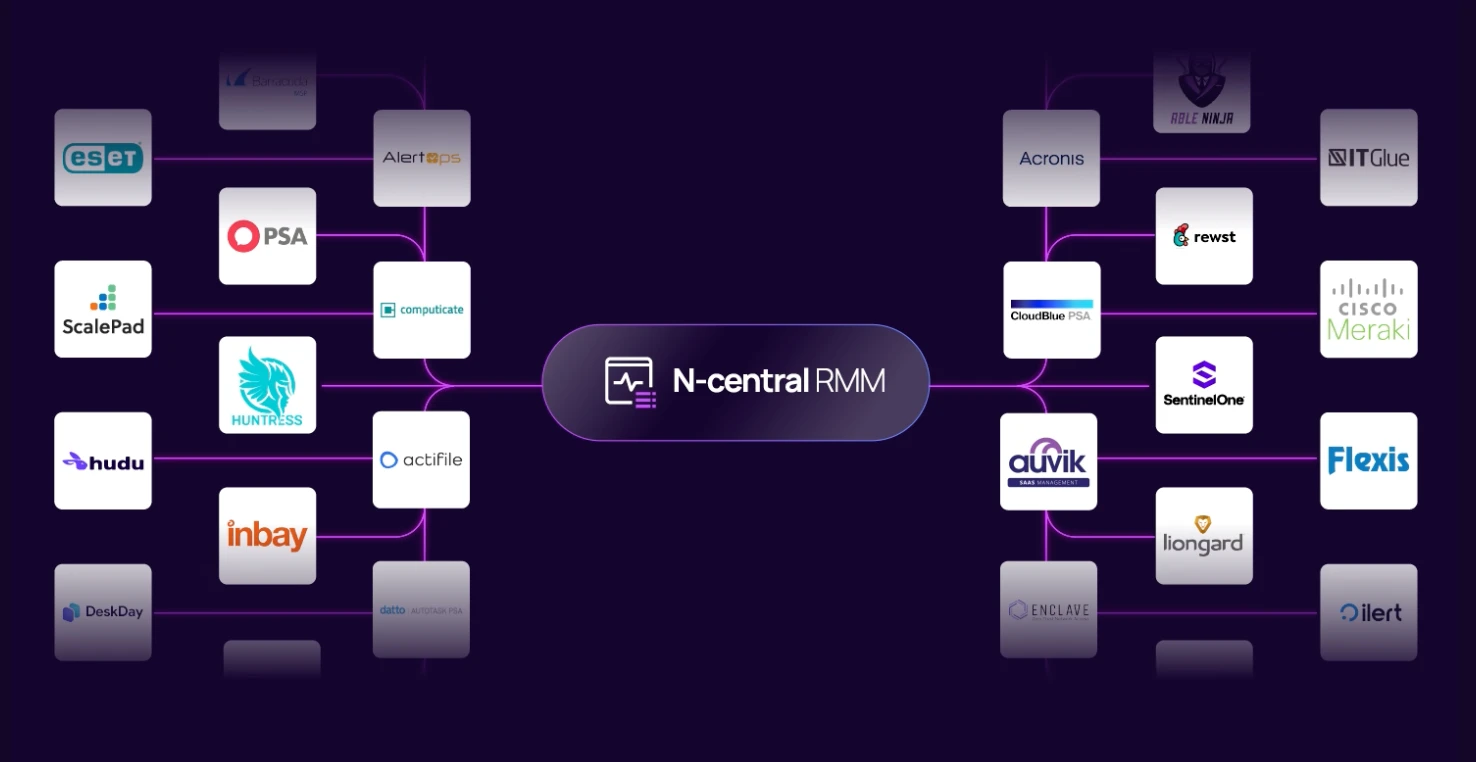
N-able patches critical N-central zero-day exploited in the wild (CVE-2026-86218)
N-able released an emergency hotfix for CVE-2026-86218, a remote code execution (RCE) flaw affecting N-central, its remote monitoring and management (RMM) solution popular with managed service providers (MSPs). In its release notes, N-able described CVE-2026-86218 as a “critical-CVSS-rated vulnerability that could allow for pre-authenticated remote code execution on the N-central server.” N-able addressed the flaw on September 5 by releasing Hotfix 4 for N-central 2026.3, bringing the build to version 2026.3.1.14. “Customers running on-premises N-central … More → The post N-able patches critical N-central zero-day exploited in the wild (CVE-2026-86218) appeared first on Help Net Security .

ConnectWise warns of new ScreenConnect flaw without patch
ConnectWise has shared temporary mitigation measures for a new ScreenConnect Remote Access vulnerability that it plans to patch later this week. [...]

Attackers spread malware through ScreenConnect file transfers
A file transfer flaw in ScreenConnect Remote Access Support and Access sessions affects both Cloud and On-Premise deployments, ConnectWise confirmed. “A CVE identifier and an official fix will be issued within the week,” the company wrote in its September 3 advisory. ScreenConnect is a popular remote support and access solution tailored for IT departments and managed service providers (MSPs). The platform can be hosted by ConnectWise (in their cloud) or self-hosted by organizations (on-prem or … More → The post Attackers spread malware through ScreenConnect file transfers appeared first on Help Net Security .

N-able Issues Fourth N-central Hotfix in Five Weeks for Unauthenticated RCE Flaw
Every on-premises N-central build below 2026.3.1.14 — including servers updated to Hotfix 3 a day earlier — needs Hotfix 4. N-able's incident notice says the flaw has been exploited in the wild; its release notes say that is unconfirmed. N-able has released its fourth hotfix in five weeks for the N-central remote monitoring and management (RMM) platform, this time for a
N-able patches max severity N-central flaw amid ongoing attacks
N-able has released an emergency hotfix for a maximum-severity remote code execution (RCE) flaw affecting its N-central remote monitoring and management (RMM) platform. [...]

Critical MikroTik Vulnerability - Patch Now, (Sun, Sep 6th)
Mikrotik released a patch late last week for an already-exploited vulnerability. The vulnerability allows an SSH authentication bypass and is already being exploited. At this point, assume compromise. Attackers have been adding new accounts to affected devices to maintain access after a patch is installed. 

Unpatched Magento and Adobe Commerce Zero-Day Exploited to Backdoor Online Stores
Attackers are exploiting a new unpatched vulnerability in Magento Open Source and Adobe Commerce that lets them run malicious code on an online store's server without logging in, Dutch e-commerce security company Sansec said in an advisory published on September 5. Sansec, which discovered the flaw and named it StyleSmuggler, said attacks started on September 4. "Sansec is publishing early

New CrowdStrike 'FalconFlank' zero-day grants SYSTEM privileges
An anonymous security researcher who uses the "Nightmare Eclipse" handle released a CrowdStrike Falcon zero-day exploit named "FalconFlank" that lets attackers escalate privileges on up-to-date Windows systems. [...]

Google patches actively exploited Chrome zero-day (CVE-2026-85046)
Google has patched 12 vulnerabilities affecting its popular Chrome browser, among them CVE-2026-85046, which has been exploited in the wild. “Google is aware that an exploit for CVE-2026-85046 exists in the wild,” the company said in a Thursday security advisory. The fix has been shipped in Chrome 152.0.7977.82/.83 for Windows and macOS and Chrome 152.0.7977.82 for Linux, with the update rolling out to users over the coming days and weeks. About CVE-2026-85046 CVE-2026-85046 (CVSS score: … More → The post Google patches actively exploited Chrome zero-day (CVE-2026-85046) appeared first on Help Net Security .

Google warns of new Chrome zero-day flaw exploited in attacks
Google has updated the Chrome browser to address an actively exploited high-severity zero-day flaw in the V8 engine and 11 other vulnerabilities. [...]

Google Patches 6th Chrome Zero-Day of 2026
Google’s Chrome 152 security update resolves 12 vulnerabilities, including a high-severity type confusion flaw in the V8 engine. The post Google Patches 6th Chrome Zero-Day of 2026 appeared first on SecurityWeek .

Google Releases Chrome Update to Patch Actively Exploited V8 Zero-Day
Google on Thursday released security updates to patch 12 vulnerabilities, including one that has come under active exploitation in the wild. The high-severity vulnerability, tracked as CVE-2026-85046 (CVSS score: 8.8), has been described as a type confusion bug in V8, Chrome's JavaScript and WebAssembly engine. "Type confusion in V8 in Google Chrome prior to 152.0.7977.82 allowed a remote

Publicado exploit para zero-day no CrowdStrike Falcon
Um pesquisador de segurança conhecido como Chaotic Eclipse, também identificado como MSNightmare e Nightmare-Eclipse, publicou na madrugada de hoje um código de prova de conceito para o que ele alega ser uma vulnerabilidade de elevação de privilégios não corrigida no sensor CrowdStrike Falcon. Ela foi denominada FalconFlank, conforme repositório disponível no GitHub. O exploit abusa do […]

Researcher Releases FalconFlank PoC Showing Privilege Escalation in CrowdStrike Falcon
The security researcher known as Chaotic Eclipse (aka INFINITE NIGHTMARE, MSNightmare, and Nightmare-Eclipse) has dropped a new zero-day dubbed FalconFlank, a privilege escalation flaw impacting Crowdstrike Falcon. "FalconFlank is a 0day privilege escalation that abuses the office malicious macros remediation in CrowdStrike Falcon Sensor," the researcher said in a GitHub README file, adding

Exploit Published for Fresh Cleo Harmony Vulnerability
The security defect allows remote attackers to bypass authentication through argument bearer manipulation. The post Exploit Published for Fresh Cleo Harmony Vulnerability appeared first on SecurityWeek .

Attackers Exploit Two SonicWall SMA 1000 Zero-Days That May Form an Attack Chain
SonicWall has released security updates to address two security flaws impacting its Secure Mobile Access (SMA) 1000 series VPN appliances that have been exploited in zero-day attacks. The vulnerabilities, discovered internally by SonicWall's William Perry and Adam Babis, are listed below - CVE-2026-83548 (CVSS score: 10.0) - A pre-authentication SSRF vulnerability in the Appliance

SonicWall SMA 1000 appliances under attack via zero-day flaws
Attackers are exploiting two previously undisclosed vulnerabilities (CVE-2026-83548, CVE-2026-83549) in SonicWall SMA 1000 appliances, the vendor confirmed on Tuesday. The vulnerabilities (CVE-2026-83548, CVE-2026-83549) The SonicWall SMA 1000 series is a line of secure remote access appliances (SSL VPN gateways) built for scale. They are used regularly by medium to large enterprises, government agencies, and managed security service providers. CVE-2026-83548 is a pre-authentication server-side request forgery (SSRF) flaw in the Appliance Work Place interface, and allows … More → The post SonicWall SMA 1000 appliances under attack via zero-day flaws appeared first on Help Net Security .

SonicWall Warns of Two SMA1000 Zero-Days Exploited in Attacks
The vulnerabilities CVE-2026-83549 and CVE-2026-83548 can be chained for unauthenticated remote code execution. The post SonicWall Warns of Two SMA1000 Zero-Days Exploited in Attacks appeared first on SecurityWeek .

Exploit contra o Avast obtém privilégios de system
Um pesquisador de segurança conhecido como Chaotic Eclipse, também identificado como MSNightmare e Nightmare-Eclipse, publicou em um repositório público no último sábado (30 de agosto) um código de prova de conceito para uma vulnerabilidade de elevação de privilégios não corrigida no Avast Antivirus, denominada por ele “PrettyPrague”. O exploit, que não possui CVE ou correção […]

PoC explora suposta falha no Kaspersky Endpoint Security
Um pesquisador identificado como MSNightmare publicou um código de prova de conceito (PoC) chamado HardBreacher, que alega explorar uma vulnerabilidade de escalonamento de privilégio local no Kaspersky Endpoint Security em sistemas Windows 11 totalmente atualizados, de acordo com o repositório do projeto. A falha, descrita como um zero-day de elevação de privilégio, não foi verificada […]

Cronos blockchain restarts after $74 million Tectonic exploit
The Cronos blockchain network has resumed trading activity after a price-manipulation attack on the Tectonic cryptocurrency lending platform allowed an attacker to borrow $74 million. [...]

Nightmare Eclipse Drops ‘HardBreacher’ Kaspersky Product Exploit
Kaspersky told SecurityWeek that it patched the vulnerability affecting its Endpoint Security product. The post Nightmare Eclipse Drops ‘HardBreacher’ Kaspersky Product Exploit appeared first on SecurityWeek .

More Details Emerge on Exploited PaperCut Vulnerabilities
PaperCut has released a second emergency patch for the exploited vulnerabilities, which are now tracked as CVE-2026-82078 and CVE-2026-81578. The post More Details Emerge on Exploited PaperCut Vulnerabilities appeared first on SecurityWeek .

Cosmos EVM Flaw Exploited After Cosmos Labs Knew Every Blockchain Running It Was Vulnerable
Cosmos Labs has warned that a critical balance-handling flaw in the shared Cosmos EVM module was exploited to drain funds from six blockchains between August 20 and August 25, 2026. The vulnerability, designated GHSA-7g4w-cg88-2cq2, is rated Critical by Cosmos Labs and was published without a CVE identifier, a weakness classification, or a CVSS score. Affected versions are < 0.6.2 and >=

China-Made ZBT Routers Ship With Two Implants Giving Unauthenticated Attackers Root Access
VulnCheck has disclosed two previously undocumented factory implants in firmware for routers built by Shenzhen Zhibotong Electronics (ZBT), each of which gives an unauthenticated remote attacker the ability to run commands as root on affected devices. The implants, named SPEAKINGSTONE and DARKLANTERN by the company's zero-day research team, are tracked as CVE-2026-74232 and CVE-2026-74233.
PaperCut Releases Emergency Patch for Exploited Zero-Day
A CVE identifier has not yet been assigned, but PaperCut is urging NG/MF users to install patches and implement mitigations. The post PaperCut Releases Emergency Patch for Exploited Zero-Day appeared first on SecurityWeek .

PaperCut Zero-Day Exploited in Attacks, Affecting All NG and MF Versions
PaperCut has alerted customers that bad actors are actively exploiting a vulnerability impacting all versions of its PaperCut NG and PaperCut MF print management software in zero-day attacks. The company has released an emergency patch for v25 and v26 to address the issue. It said it's "aware of confirmed customer incidents and is treating this matter with the highest priority." An

Print management outfit PaperCut is under 0-day attack, and it’s drawing customers’ blood
The fix is either an unvalidated and unofficial emergency patch or taking the server offline

PaperCut NG e MF têm falha explorada em ataques zero-day
A PaperCut está alertando que hackers estão explorando ativamente uma vulnerabilidade em todas as versões de seus softwares de gerenciamento de impressão PaperCut NG e PaperCut MF em ataques do tipo zero-day. A empresa afirmou estar ciente de ataques confirmados a clientes e publicou um comunicado de segurança urgente nesta quinta-feira. A PaperCut afirma que […]

PaperCut warns of NG, MF flaw exploited in zero-day attacks
PaperCut is warning that hackers are actively exploiting a vulnerability in all versions of its PaperCut NG and PaperCut MF print management software in zero-day attacks. [...]

Amazon Kiro Prompt Injection Can Exfiltrate Sensitive Data Through Kiro Powers
Cybersecurity researchers have disclosed details of a vulnerability in Amazon Kiro, an artificial intelligence (AI)-powered, agentic integrated development environment (IDE), that could facilitate data exfiltration via prompt injection and Kiro Powers. The security flaw, which does not have a CVE identifier, works against Kiro IDE 0.7.45 on Windows, according to Mindguard. The latest version of
Ebyte NA111-M
View CSAF Summary Successful exploitation of these vulnerabilities could allow an attacker to fully compromise the device. The following versions of Ebyte NA111-M are affected: NA111-M Firmware 9013-2-17 (CVE-2026-73125, CVE-2026-76179, CVE-2026-75814, CVE-2026-76940, CVE-2026-77966, CVE-2026-73809, CVE-2026-71187, CVE-2026-75548, CVE-2026-69658, CVE-2026-76133, CVE-2026-73819, CVE-2026-77975, CVE-2026-77977) CVSS Vendor Equipment Vulnerabilities v3 9.8 Ebyte Ebyte NA111-M Missing Authentication for Critical Function, Use of GET Request Method With Sensitive Query Strings, Cross-Site Request Forgery (CSRF), Improper Restriction of Excessive Authentication Attempts, Missing Authorization, Cleartext Transmission of Sensitive Information, Use of Client-Side Authentication, Improper Restriction of Rendered UI Layers or Frames, Use of a Broken or Risky Cryptographic Algorithm, Weak Authentication, Cleartext Storage of Sensitive Information Background Critical Infrastructure Sectors: Information Technology Countries/Areas Deployed: Worldwide Company Headquarters Location: China Vulnerabilities Expand All + CVE-2026-73125 Ebyte device web management interface does not consistently enforce authentication before granting access to administrative functionality. An unauthenticated remote attacker could access sensitive configuration information, modify device settings, or disrupt availability. View CVE Details Affected Products Ebyte NA111-M Vendor: Ebyte Product Version: Ebyte NA111-M Firmware: 9013-2-17 Product Status: known_affected Remediations Mitigation Ebyte acknowledged receipt of the reported vulnerabilities and indicated that a patch was under development. However, the vendor has not responded to subsequent requests for coordination, and CISA has not been informed of the status or availability of the patch. Users are encouraged to reach out to Ebyte for more information. Relevant CWE: CWE-306 Missing Authentication for Critical Function Metrics CVSS Version Base Score Base Severity Vector String 3.1 9.8 CRITICAL CVSS:3.1/AV:N/AC:L/PR:N/UI:N/S:U/C:H/I:H/A:H 4.0 9.3 CRITICAL CVSS:4.0/AV:N/AC:L/AT:N/PR:N/UI:N/VC:H/VI:H/VA:H/SC:N/SI:N/SA:N CVE-2026-76179 An improper protection of authentication tokens vulnerability exists in certain Ebyte gateway products. Authentication tokens used by the web management interface are insufficiently protected during client-side session handling, which may allow an attacker with access to exposed session information to obtain and reuse a valid token. Successful exploitation could allow an attacker to impersonate an authenticated user and gain unauthorized access to device management functionality. View CVE Details Affected Products Ebyte NA111-M Vendor: Ebyte Product Version: Ebyte NA111-M Firmware: 9013-2-17 Product Status: known_affected Remediations Mitigation Ebyte acknowledged receipt of the reported vulnerabilities and indicated that a patch was under development. However, the vendor has not responded to subsequent requests for coordination, and CISA has not been informed of the status or availability of the patch. Users are encouraged to reach out to Ebyte for more information. Relevant CWE: CWE-598 Use of GET Request Method With Sensitive Query Strings Metrics CVSS Version Base Score Base Severity Vector String 3.1 9.8 CRITICAL CVSS:3.1/AV:N/AC:L/PR:N/UI:N/S:U/C:H/I:H/A:H 4.0 9.3 CRITICAL CVSS:4.0/AV:N/AC:L/AT:N/PR:N/UI:N/VC:H/VI:H/VA:H/SC:N/SI:N/SA:N CVE-2026-75814 Ebyte device does not adequately verify the origin or authenticity of requests submitted to the web management interface. An unauthenticated remote attacker could persuade an authenticated administrator to visit a crafted page, causing unauthorized configuration changes or a disruption of device availability. View CVE Details Affected Products Ebyte NA111-M Vendor: Ebyte Product Version: Ebyte NA111-M Firmware: 9013-2-17 Product Status: known_affected Remediations Mitigation Ebyte acknowledged receipt of the reported vulnerabilities and indicated that a patch was under development. However, the vendor has not responded to subsequent requests for coordination, and CISA has not been informed of the status or availability of the patch. Users are encouraged to reach out to Ebyte for more information. Relevant CWE: CWE-352 Cross-Site Request Forgery (CSRF) Metrics CVSS Version Base Score Base Severity Vector String 3.1 8.8 HIGH CVSS:3.1/AV:N/AC:L/PR:N/UI:R/S:U/C:H/I:H/A:H 4.0 8.6 HIGH CVSS:4.0/AV:N/AC:L/AT:N/PR:N/UI:A/VC:H/VI:H/VA:H/SC:N/SI:N/SA:N CVE-2026-76940 The affected Ebyte

Unknown PaperCut NG/MF vulnerability is under active attack
A yet unspecified vulnerability affecting print management solutions PaperCut NG and PaperCut MF is being exploited by attackers, PaperCut Software warned today. “We are aware of confirmed customer incidents and are treating this matter with the highest priority,” the vendor said. What is PaperCut NG/MF? PaperCut NG is print management software for places like offices, schools, and other organizations. PaperCut MF (“Multi-Function”) is the upgraded version that works directly with the big all-in-one office copier … More → The post Unknown PaperCut NG/MF vulnerability is under active attack appeared first on Help Net Security .

Unpatched Kaltura mwEmbed Flaws Could Let Remote Attackers Read Files and Run Code
The CERT Coordination Center (CERT/CC) has disclosed two unpatched vulnerabilities in Kaltura's HTML5 video player library that allow a remote, unauthenticated attacker to read arbitrary files from a server and execute code on it. The flaws, tracked as CVE-2026-19913 and CVE-2026-19912, both stem from the same unsafe deserialization in the mwEmbedLoader.php endpoint of the mwEmbed player

A Malicious Webpage Could Poison Your Local AI Model Behind NVIDIA NemoClaw
Oasis Security has disclosed a weakness in NVIDIA NemoClaw that could let an attacker-controlled webpage take unauthenticated control of the local Ollama instance serving an AI agent and plant hidden instructions inside the model itself. The findings were shared with The Hacker News ahead of publication, and the report says Oasis Security reported them to NVIDIA's Product Security Incident
Ebyte NE2-D11
View CSAF Summary Successful exploitation of these vulnerabilities could allow an attacker to gain unauthorized administrative access, disclose sensitive information, modify device configuration, hijack authenticated sessions, and disrupt device operation. The following versions of Ebyte NE2-D11 are affected: NE2-D11 Firmware FW-9167-0-11 CVSS Vendor Equipment Vulnerabilities v3 9.8 Ebyte Ebyte NE2-D11 Missing Authentication for Critical Function, Cleartext Transmission of Sensitive Information, Insufficiently Protected Credentials, Use of Client-Side Authentication, Use of GET Request Method With Sensitive Query Strings, Cross-Site Request Forgery (CSRF), Improper Restriction of Excessive Authentication Attempts, Improper Restriction of Rendered UI Layers or Frames, Missing Authorization Background Critical Infrastructure Sectors: Critical Manufacturing, Energy Countries/Areas Deployed: Worldwide Company Headquarters Location: China Vulnerabilities Expand All + CVE-2026-73125 Ebyte device web management interface does not consistently enforce authentication before granting access to administrative functionality. An unauthenticated remote attacker could access sensitive configuration information, modify device settings, or disrupt availability. View CVE Details Affected Products Ebyte NE2-D11 Vendor: Ebyte Product Version: Ebyte NE2-D11 Firmware: FW-9167-0-11 Product Status: known_affected Remediations Mitigation Ebyte acknowledged receipt of the reported vulnerabilities and indicated that a patch was under development. However, the vendor has not responded to subsequent requests for coordination, and CISA has not been informed of the status or availability of the patch. Users are encouraged to reach out to Ebyte for more information. Relevant CWE: CWE-306 Missing Authentication for Critical Function Metrics CVSS Version Base Score Base Severity Vector String 3.1 9.8 CRITICAL CVSS:3.1/AV:N/AC:L/PR:N/UI:N/S:U/C:H/I:H/A:H 4.0 9.3 CRITICAL CVSS:4.0/AV:N/AC:L/AT:N/PR:N/UI:N/VC:H/VI:H/VA:H/SC:N/SI:N/SA:N CVE-2026-73809 A cleartext transmission of sensitive information vulnerability exists in certain Ebyte gateway products. The web management interface does not adequately protect sensitive communications using transport-layer encryption. An attacker with access to network traffic could intercept authentication or session-related information transmitted between a user and the affected device. Successful exploitation could result in disclosure of sensitive information and unauthorized access to device management functionality. View CVE Details Affected Products Ebyte NE2-D11 Vendor: Ebyte Product Version: Ebyte NE2-D11 Firmware: FW-9167-0-11 Product Status: known_affected Remediations Mitigation Ebyte acknowledged receipt of the reported vulnerabilities and indicated that a patch was under development. However, the vendor has not responded to subsequent requests for coordination, and CISA has not been informed of the status or availability of the patch. Users are encouraged to reach out to Ebyte for more information. Relevant CWE: CWE-319 Cleartext Transmission of Sensitive Information Metrics CVSS Version Base Score Base Severity Vector String 3.1 7.5 HIGH CVSS:3.1/AV:N/AC:L/PR:N/UI:N/S:U/C:H/I:N/A:N 4.0 8.7 HIGH CVSS:4.0/AV:N/AC:L/AT:N/PR:N/UI:N/VC:H/VI:N/VA:N/SC:N/SI:N/SA:N CVE-2026-73839 Administrative credentials may be exposed in plaintext within the Ebyte device's management interface, increasing the risk of credential compromise through visual or remote observation. This undermines the confidentiality of device access. View CVE Details Affected Products Ebyte NE2-D11 Vendor: Ebyte Product Version: Ebyte NE2-D11 Firmware: FW-9167-0-11 Product Status: known_affected Remediations Mitigation Ebyte acknowledged receipt of the reported vulnerabilities and indicated that a patch was under development. However, the vendor has not responded to subsequent requests for coordination, and CISA has not been informed of the status or availability of the patch. Users are encouraged to reach out to Ebyte for more information. Relevant CWE: CWE-522 Insufficiently Protected Credentials Metrics CVSS Version Base Score Base Severity Vector String 3.1 4.6 MEDIUM CVSS:3.1/AV:P/AC:L/PR:N/UI:N/S:U/C:H/I:N/A:N 4.0 5.1 MEDIUM CVSS:4.0/AV:P/AC:L/AT:N/PR:N/UI:N/VC:H/VI:N/VA:N/SC:N/SI:N/SA:N CVE-2026-71187 Ebyte device relies on client side authentication logic that can be reproduced by unauthenticated users. An attacker may generate valid authentication requests and bypass authentication to obtain admi
FURUNO FA-50 Class B AIS Transponder
View CSAF Summary Successful exploitation of these vulnerabilities could allow an attacker to alter device settings. The following versions of FURUNO FA-50 Class B AIS Transponder are affected: FURUNO FA-50 Class B AIS Transponder vers:all/* CVSS Vendor Equipment Vulnerabilities v3 9.1 FURUNO ELECTRIC CO.,LTD. FURUNO FA-50 Class B AIS Transponder Use of Hard-coded Credentials, Missing Authentication for Critical Function Background Critical Infrastructure Sectors: Transportation Systems Countries/Areas Deployed: Worldwide Company Headquarters Location: Japan Vulnerabilities Expand All + CVE-2026-59769 An attacker, who knows the credentials and has access to the in-vessel network to which the device is connected to, may operate the settings screen using that credentials to alter the settings of the device. View CVE Details Affected Products FURUNO FA-50 Class B AIS Transponder Vendor: FURUNO ELECTRIC CO.,LTD. Product Version: FURUNO FA-50 Class B AIS Transponder: vers:all/* Product Status: known_affected Remediations Mitigation FURUNO ELECTRIC CO.,LTD. notes that production of this product ended in October 2020, and software updates will no longer be provided. FURUNO recommends users do not connect the product directly to the internet. To prevent unauthorized access, the vessel on which the product is installed should be properly locked and managed. Relevant CWE: CWE-798 Use of Hard-coded Credentials Metrics CVSS Version Base Score Base Severity Vector String 3.1 9.1 CRITICAL CVSS:3.1/AV:N/AC:L/PR:N/UI:N/S:U/C:N/I:H/A:H 4.0 8.8 HIGH CVSS:4.0/AV:N/AC:L/AT:N/PR:N/UI:N/VC:N/VI:H/VA:H/SC:N/SI:N/SA:N CVE-2026-67578 Some configurations may be changed on the management screen without authentication. View CVE Details Affected Products FURUNO FA-50 Class B AIS Transponder Vendor: FURUNO ELECTRIC CO.,LTD. Product Version: FURUNO FA-50 Class B AIS Transponder: vers:all/* Product Status: known_affected Remediations Mitigation FURUNO ELECTRIC CO.,LTD. notes that production of this product ended in October 2020, and software updates will no longer be provided. FURUNO recommends users do not connect the product directly to the internet. To prevent unauthorized access, the vessel on which the product is installed should be properly locked and managed. Relevant CWE: CWE-306 Missing Authentication for Critical Function Metrics CVSS Version Base Score Base Severity Vector String 3.1 7.5 HIGH CVSS:3.1/AV:N/AC:L/PR:N/UI:N/S:U/C:N/I:H/A:N 4.0 8.7 HIGH CVSS:4.0/AV:N/AC:L/AT:N/PR:N/UI:N/VC:N/VI:H/VA:N/SC:N/SI:N/SA:N Acknowledgments Souvik Kandar reported these vulnerabilities to CISA JPCERT/CC coordinated with Furuno Electric and CISA Legal Notice and Terms of Use This product is provided subject to this Notification (https://www.cisa.gov/notification) and this Privacy & Use policy (https://www.cisa.gov/privacy-policy). Recommended Practices CISA recommends users take defensive measures to minimize the risk of exploitation of these vulnerabilities. Minimize network exposure for all control system devices and/or systems, ensuring they are not accessible from the internet. Locate control system networks and remote devices behind firewalls and isolating them from business networks. When remote access is required, use more secure methods, such as Virtual Private Networks (VPNs), recognizing VPNs may have vulnerabilities and should be updated to the most current version available. Also recognize VPN is only as secure as the connected devices. CISA reminds organizations to perform proper impact analysis and risk assessment prior to deploying defensive measures. CISA also provides a section for control systems security recommended practices on the ICS webpage on cisa.gov/ics. Several CISA products detailing cyber defense best practices are available for reading and download, including Improving Industrial Control Systems Cybersecurity with Defense-in-Depth Strategies. CISA encourages organizations to implement recommended cybersecurity strategies for proactive defense of ICS assets. Additional mitigation guidance and recommended practices are publicly available on the ICS webpage at cisa.gov/ics in the technical information paper, ICS-TIP-12-146-01B--Targeted Cyber Intrusion Detection and Mitigation Strategies. Organizations observing suspected malicious activity should follow established internal procedures and report findings to CISA for tracking and correlation against other incidents. No known public exploitation specifically targeting these vulnerabilities has been reported to CISA at this time. Revision History Initial Release Date: 2026-08-25 Date Revis
PayRange API
View CSAF Summary Successful exploitation of this vulnerability could allow a remote, authenticated or unauthenticated attacker to disclose sensitive information, arbitrarily modify the device to cause a denial of service, or alter a devices displayed image. The following versions of PayRange API are affected: PayRange API vers:all/* CVSS Vendor Equipment Vulnerabilities v3 8.8 PayRange PayRange API Missing Authorization Background Critical Infrastructure Sectors: Commercial Facilities Countries/Areas Deployed: United States, Canada Company Headquarters Location: United States Vulnerabilities Expand All + CVE-2026-18965 The affected product is missing proper authorization on management endpoints, which allows verbose details of every device on the PayRange network to be publicly accessible, with or without an account. View CVE Details Affected Products PayRange API Vendor: PayRange Product Version: PayRange PayRange API: vers:all/* Product Status: known_affected Remediations Mitigation PayRange has not responded to requests to work with CISA to mitigate this vulnerability. Users of PayRange devices are invited to contact PayRange customer support at support@payrange.com for additional information. mailto:support@payrange.com Relevant CWE: CWE-862 Missing Authorization Metrics CVSS Version Base Score Base Severity Vector String 3.1 8.8 HIGH CVSS:3.1/AV:N/AC:L/PR:L/UI:N/S:U/C:H/I:H/A:H 4.0 8.7 HIGH CVSS:4.0/AV:N/AC:L/AT:N/PR:L/UI:N/VC:H/VI:H/VA:H/SC:N/SI:N/SA:N Acknowledgments Tahi Wilton Geary reported this vulnerability to CISA Legal Notice and Terms of Use This product is provided subject to this Notification (https://www.cisa.gov/notification) and this Privacy & Use policy (https://www.cisa.gov/privacy-policy). Recommended Practices CISA recommends users take defensive measures to minimize the risk of exploitation of this vulnerability. Minimize network exposure for all control system devices and/or systems, ensuring they are not accessible from the internet. Locate control system networks and remote devices behind firewalls and isolating them from business networks. When remote access is required, use more secure methods, such as Virtual Private Networks (VPNs), recognizing VPNs may have vulnerabilities and should be updated to the most current version available. Also recognize VPN is only as secure as the connected devices. CISA reminds organizations to perform proper impact analysis and risk assessment prior to deploying defensive measures. CISA also provides a section for control systems security recommended practices on the ICS webpage on cisa.gov/ics. Several CISA products detailing cyber defense best practices are available for reading and download, including Improving Industrial Control Systems Cybersecurity with Defense-in-Depth Strategies. CISA encourages organizations to implement recommended cybersecurity strategies for proactive defense of ICS assets. Additional mitigation guidance and recommended practices are publicly available on the ICS webpage at cisa.gov/ics in the technical information paper, ICS-TIP-12-146-01B--Targeted Cyber Intrusion Detection and Mitigation Strategies. Organizations observing suspected malicious activity should follow established internal procedures and report findings to CISA for tracking and correlation against other incidents. CISA also recommends users take the following measures to protect themselves from social engineering attacks: Do not click web links or open attachments in unsolicited email messages. Refer to Recognizing and Avoiding Email Scams for more information on avoiding email scams. Refer to Avoiding Social Engineering and Phishing Attacks for more information on social engineering attacks. No known public exploitation specifically targeting this vulnerability has been reported to CISA at this time. Revision History Initial Release Date: 2026-08-25 Date Revision Summary 2026-08-25 1 Initial Publication Legal Notice and Terms of Use
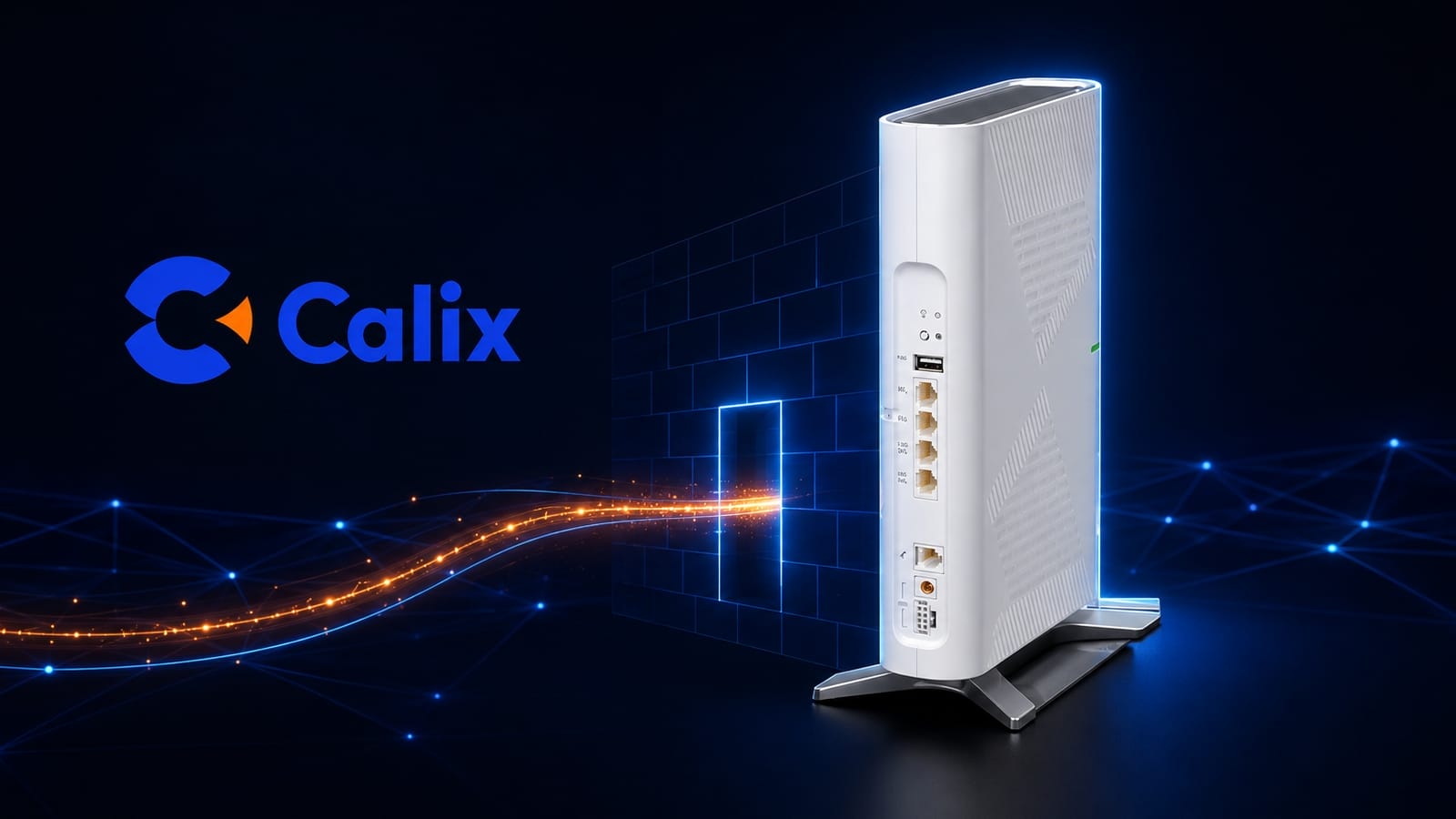
Unpatched Calix flaw lets hackers bypass NAT to expose internal devices
An unpatched vulnerability in Calix GS7 XGS (GS5239XG) residential routers used by multiple U.S. broadband providers allows remote, unauthenticated attackers to create port-forwarding rules that can expose local network devices to the public internet. [...]

Critical Microsoft Entra ID vulnerability exploited in the wild (CVE-2026-69836)
Microsoft has patched a critical remote code execution vulnerability (CVE-2026-69836) in Entra ID, reportedly exploited in the wild. Entra ID is Microsoft’s cloud identity service, formerly Azure Active Directory, that verifies logins and controls access to Microsoft 365, Azure, and connected third-party apps. Tracked as CVE-2026-69836, with the maximum CVSS score of 10.0, the vulnerability was discovered by Microsoft Principal Security Engineer Robert Fitzpatrick and could allow an unauthenticated attacker to remotely execute code in … More → The post Critical Microsoft Entra ID vulnerability exploited in the wild (CVE-2026-69836) appeared first on Help Net Security .

Microsoft warns of max severity Entra ID flaw exploited in attacks
Microsoft has patched a maximum-severity vulnerability in the Entra ID identity and access management (IAM) platform that has been exploited in attacks. [...]

Microsoft Entra ID Flaw (CVSS 10.0) Exploited in Wild, Allows Remote Code Execution
Microsoft on Thursday warned of a maximum-severity security flaw in Entra ID that it said has been exploited in the wild, but noted that no customer action is required. The vulnerability, tracked as CVE-2026-69836 (CVSS score: 10.0), is a case of remote code execution impacting the tech giant's cloud-based identity and access management service. It was previously called Azure Active Directory

New Cryptographic Context Injection Attack Could Let Web Pages Steal Grok Chat Data
Adversa AI has disclosed an attack technique that it says can cause xAI's Grok chatbot to send a user's name, approximate location, subscription tier, and the prompts from the ongoing conversation to an attacker-controlled server after the user asks it to summarize an ordinary web page. The AI security company, which has codenamed the technique "Cryptographic Context Injection," said the

Isolated-vm Flaw Lets Sandboxed JavaScript Escape to Host for Potential RCE
Cybersecurity researchers have disclosed a critical security flaw in isolated-vm, a popular open-source sandbox with more than 2,900 stars and 190 forks on GitHub, that could allow attackers to escape the confines of the isolated environment. The vulnerability ("GHSA-864f-rcv7-6rh4"), which has yet to be assigned a CVE identifier, impacts all versions of the library before and including 7.0.0.

Critical GitLab Zero-Click Flaw Poses Mitigation Challenges
A lack of technical details could make it hard for organizations running self-managed GitLab versions to detect potential exploitation of CVE-2026-19478.

Snowflake GitHub Actions Flaw Lets Crafted Issues Trigger Command Injection
Cybersecurity researchers at Wiz have disclosed a new GitHub Actions workflow injection vulnerability in Snowflake's public snowflakedb/snowflake-connector-net repository that it said could be exploited through a crafted GitHub issue to execute commands in a workflow containing internal Jira credentials. The issue was present in .github/workflows/jira_issue.yml, which ran when a

Microsoft confirma patch para zero-day ShieldBreak no Defender
A Microsoft comunicou que está trabalhando em uma correção de segurança para uma vulnerabilidade de dia zero no Microsoft Defender chamada “ShieldBreak“, após divulgação pública pelo pesquisador que usa o pseudônimo “Nightmare Eclipse”. A falha, agora rastreada como CVE-2026-69414, é um problema de elevação de privilégio no Mecanismo de Proteção contra Malware do Microsoft Defender, […]
ShieldBreak bypasses Microsoft’s patch for earlier Defender flaw
The researcher who found RoguePlanet has discovered ShieldBreak, a new way to bypass Microsoft’s fix and gain SYSTEM privileges.

Unisoc VoLTE Video Call Exploit Chain Can Give Attackers Full Android Kernel Access
Security researchers at SSD Secure Disclosure have published a two-stage exploit chain that achieves full Android kernel access on devices running Unisoc modem firmware through a VoLTE video call, with no fix from the chipset maker. The advisory, published August 17, 2026, is the second stage of a chain that began in March 2026, when SSD disclosed remote code execution in the

SafePal breach affects 39,798 customers, data allegedly for sale
Cryptocurrency wallet maker SafePal disclosed a data breach that exposed order information for 39,798 customers, including names, email addresses, shipping addresses, phone numbers and purchase details. The company traced the exposure to an authorization flaw in a plug-in used for order tracking. Under certain conditions, the flaw let one customer view another customer’s order information. The exposure covers orders placed between March 2, 2025 and April 11, 2026. SafePal received a report consistent with the … More → The post SafePal breach affects 39,798 customers, data allegedly for sale appeared first on Help Net Security .

Microsoft working on Defender patch for ShieldBreak zero-day
Microsoft is working on a security patch for the "ShieldBreak" zero-day vulnerability disclosed last week by security researcher "Nightmare Eclipse" and now tracked as CVE-2026-69414. [...]

Hackers exploit macOS Screen Sharing flaw to deploy Monero miner
The Netherlands' National Cyber Security Centre (NCSC) is warning that hackers are actively exploiting a macOS authentication bypass vulnerability after public exploit code emerged. [...]

Hackers Exploiting Unpatched GeoServer Zero-Day
The security defect is described as an SQL injection that could allow attackers to achieve remote code execution. The post Hackers Exploiting Unpatched GeoServer Zero-Day appeared first on SecurityWeek .

Microsoft corrige falha LegacyHive no Windows
A Microsoft publicou, em 13 de agosto, atualizações de segurança para corrigir uma vulnerabilidade de dia zero no Windows conhecida como “LegacyHive”. A falha foi divulgada pelo pesquisador que usa o pseudônimo “Nightmare Eclipse”, horas após a edição de julho do Patch Tuesday, em protesto contra as práticas de programa de recompensas por bugs e […]

GeoServer Zero-Day Targeted in Active Exploitation Attempts, Can Lead to RCE
A newly disclosed zero-day flaw in GeoServer is seeing active exploitation efforts, per watchTowr. The vulnerability, which has yet to be assigned a CVE identifier, is an SQL injection vulnerability in the open-source platform that can lead to remote code execution (RCE). The security defect remains unpatched. It was first disclosed on August 12, 2026, at 10:46 UTC, by a researcher named @

Microsoft patches LegacyHive Windows zero-day vulnerability
Microsoft has released security patches to address a Windows zero-day vulnerability known as "LegacyHive," disclosed after the July 2026 Patch Tuesday. [...]
Hitachi Energy APM Edge Product
View CSAF Summary Hitachi Energy is aware of Dirty Frag vulnerabilities that affect APM Edge product versions listed in this document. Successful exploitation of these vulnerabilities could result in impact on confidentiality, integrity and availability of the product. Please refer to the Recommended Immediate Actions for information about the mitigation/remediation. The following versions of Hitachi Energy APM Edge Product are affected: APM Edge vers:APM_Edge/<=6.10 (CVE-2026-43284, CVE-2026-43500) CVSS Vendor Equipment Vulnerabilities v3 8.8 Hitachi Energy Hitachi Energy APM Edge Product Write-what-where Condition, Out-of-bounds Write Background Critical Infrastructure Sectors: Energy Countries/Areas Deployed: Worldwide Company Headquarters Location: Switzerland Vulnerabilities Expand All + CVE-2026-43284 CWE-123: Write-what-where Condition A vulnerability exists in the IPsec ESP subsystem (esp4, esp6) of the Linux kernel used in APM Edge that allows a local unprivileged user to escalate privileges to root. The flaw exists in how the kernel handles memory pages when processing ESP encrypted network packets. An attacker can craft a packet that causes the kernel to decrypt data directly into memory pages it does not own, including the cached copies of privileged operating system binaries. When one of those binaries is executed, the attacker's injected code runs with root privileges. In APM Edge, the vulnerable kernel modules (esp4, esp6) can be loaded by any local user and exploited. View CVE Details Affected Products Hitachi Energy APM Edge Product Vendor: Hitachi Energy Product Version: APM Edge versions 6.10 and prior Product Status: known_affected Remediations Mitigation Disable the esp4 and esp6 modules [2] Relevant CWE: CWE-123 Write-what-where Condition Metrics CVSS Version Base Score Base Severity Vector String 3.1 8.8 HIGH CVSS:3.1/AV:L/AC:L/PR:L/UI:N/S:C/C:H/I:H/A:H CVE-2026-43500 CWE-787: Out-of-bounds Write A vulnerability exists in the RxRPC protocol implementation of Linux kernel used in APM Edge that allows a local unprivileged user to escalate privileges to root. RxRPC incorrectly processes incoming network packets that carry externally owned memory fragments. During packet processing, the kernel writes decrypted data directly into memory pages it does not own, including cached copies of privileged operating system binaries. Upon execution of a corrupted binary, the attacker's injected code runs with root privileges. In APM Edge, the vulnerable kernel module (rxrpc) can be loaded by any local user and exploited. View CVE Details Affected Products Hitachi Energy APM Edge Product Vendor: Hitachi Energy Product Version: APM Edge versions 6.10 and prior Product Status: known_affected Remediations Mitigation Disable the rxrpc module [2] Relevant CWE: CWE-787 Out-of-bounds Write Metrics CVSS Version Base Score Base Severity Vector String 3.1 7.8 HIGH CVSS:3.1/AV:L/AC:L/PR:L/UI:N/S:U/C:H/I:H/A:H Acknowledgments Hitachi Energy Internal Team reported these vulnerabilities to CISA Notice The information in this document is subject to change without notice and should not be construed as a commitment by Hitachi Energy. Hitachi Energy provides no warranty, express or implied, including warranties of merchantability and fitness for a particular purpose, for the information contained in this document, and assumes no responsibility for any errors that may appear in this document. In no event shall Hitachi Energy or any of its suppliers be liable for direct, indirect, special, incidental or consequential damages of any nature or kind arising from the use of this document, or from the use of any hardware or software described in this document, even if Hitachi Energy or its suppliers have been advised of the possibility of such damages. This document and parts hereof must not be reproduced or copied without written permission from Hitachi Energy and the contents hereof must not be imparted to a third party nor used for any unauthorized purpose. All rights to registrations and trademarks reside with their respective owners. Support For additional information and support please contact your product provider or Hitachi Energy service organization. For contact information, see https://www.hitachienergy.com/contact-us/ for Hitachi Energy contact-centers. General Mitigation Factors Recommended security practices and firewall configurations can help protect a process control network from attacks that originate from outside the network. Such practices include that process control systems are physically protected from direct access by unauthorized personnel, have no direct connections to the Internet, an

Nightmare Eclipse Drops Windows Zero-Day Exploit ‘ShieldBreak’
Dropped on Patch Tuesday, the exploit allows any user to spawn a shell with System privileges. The post Nightmare Eclipse Drops Windows Zero-Day Exploit ‘ShieldBreak’ appeared first on SecurityWeek .
Cisco fixes vulnerability exploited to DoS its firewalls (CVE-2026-20349)
A high-severity vulnerability (CVE-2026-20349) is being leveraged by attackers to temporarily interrupt the operation of Cisco firewalls, the company has confirmed. The flaw has been added to CISA’s Known Exploited Vulnerabilities catalog and needs to be remediated by US civilian federal agencies by August 14, 2026. Details about the attacks are currently under wraps. Cisco only shared that its Product Security Incident Response Team (PSIRT) became aware of active exploitation of this vulnerability in August … More → The post Cisco fixes vulnerability exploited to DoS its firewalls (CVE-2026-20349) appeared first on Help Net Security .

Grupo Lazarus explora zero-day do Windows contra empresas de defesa
O grupo de hackers Lazarus, ligado à Coreia do Norte, explorou ativamente uma vulnerabilidade do tipo zero-day no Windows (CVE-2026-68820) para atacar empresas do setor de defesa como parte da campanha Operation Dream Job, de acordo com um relatório da Check Point. A falha, corrigida pela Microsoft no Patch Tuesday de agosto, é um “use […]

Microsoft-vendetta hacker has a new zero day that gives system privileges on fully patched Windows
Exploit Wednesday's back, baby

Lazarus hackers exploited Windows zero-day to target defense firms
North Korean hackers have been exploiting a Windows zero-day vulnerability (CVE-2026-68820) to target defense-sector companies as part of the Operation Dream Job campaign. [...]

CISA gives federal agencies two weeks to patch Microsoft bug exploited in DPRK campaign
Researchers disclosed the bug to Microsoft after examining a long-running campaign by North Korean hackers to exploit the job application process.
New Microsoft Defender 'ShieldBreak' zero-day grants SYSTEM privileges
Nightmare Eclipse has released a new Microsoft Defender zero-day exploit named "ShieldBreak" after Microsoft released the August 2026 Patch Tuesday security updates. [...]

Microsoft patches 400+ vulnerabilities, one zero-day under attack (CVE-2026-68820)
Microsoft’s August 2026 Patch Tuesday delivered security fixes for 400+ vulnerabilities, including one that has been exploited in zero-day attacks (CVE-2026-68820) and three that were publicly disclosed prior to the release of the patches. Vulnerabilities of note CVE-2026-68820 is a use-after-free flaw that affects the Windows Ancillary Function Driver for WinSock (AFD.sys) and allows a low-privileged local attacker to elevate privileges to SYSTEM. “A locally authenticated attacker could run a specially crafted application on an … More → The post Microsoft patches 400+ vulnerabilities, one zero-day under attack (CVE-2026-68820) appeared first on Help Net Security .

Fresh Windows Zero-Day Exploited in North Korean Cyberattacks
The bug allowed attackers to gain full control of the victims’ systems and deploy the ForestTiger backdoor. The post Fresh Windows Zero-Day Exploited in North Korean Cyberattacks appeared first on SecurityWeek .

ShieldBreak Zero-Day PoC Claims Microsoft Defender Patch Bypass With SYSTEM Access
The security researcher going by the name Chaotic Eclipse (aka INFINITE NIGHTMARE, MSNightmare, and Nightmare-Eclipse) has released a proof-of-concept (PoC) for a new Microsoft zero-day called ShieldBreak. The vulnerability, rooted in Microsoft Defender for Windows, demonstrates a patch bypass for CVE-2026-50656 (CVSS score: 7.8), otherwise known as RoguePlanet. RoguePlanet has been described

Cisco ASA and FTD Flaw Exploited in the Wild Can Trigger Remote DoS
Cisco has warned that a new vulnerability impacting Secure Firewall Adaptive Security Appliance (ASA) Software and Secure Firewall Threat Defense (FTD) Software has been exploited in the wild. The high-severity flaw, tracked as CVE-2026-20349 (CVSS score: 8.6), is a case of insufficient error checking when processing HTTP requests that could allow an unauthenticated, remote attacker to trigger

Cisco Patches Firewall Zero-Day Exploited for DoS Attacks
CVE-2026-20349 can be exploited remotely without authentication against Secure Firewall ASA and FTD devices. The post Cisco Patches Firewall Zero-Day Exploited for DoS Attacks appeared first on SecurityWeek .

Microsoft Patches 398 Flaws Including a Windows Driver Zero-Day Under Active Attack
Microsoft released its monthly security updates on Tuesday, and one of the flaws it closed is already being used in attacks. The bug sits in a core Windows kernel driver that handles network socket operations. An attacker with code already running on a machine can use it to escalate to SYSTEM. That patch goes out first. The flaw is tracked as CVE-2026-68820 (CVSS score: 7.0) and is the only

Cisco alerta para falha em VPN explorada
A Cisco Systems publicou um aviso sobre uma vulnerabilidade de alta severidade, identificada como CVE-2026-20349 (CVSS de 8.6), que está sendo explorada ativamente em ataques para derrubar remotamente dispositivos que executam os softwares Secure Firewall ASA e Threat Defense (FTD). A falha, causada por uma verificação insuficiente de erros durante o processamento de solicitações HTTP, […]

Zoom Annotation Flaws Could Let a Meeting Participant Hijack Another Attendee's Client
Anyone sharing their screen on a Zoom call could have taken over the computers of everyone watching, and anyone watching could have taken over the presenter's. The flaw sat in the annotation tool, the feature that lets participants draw and type on a shared screen, and it asked nothing of the victim beyond being in the meeting. No click, no download, no prompt, and nothing on screen to show it
Pulsetto Vagus Nerve Stimulator
View CSAF Summary Successful exploitation of this vulnerability could allow an attacker to use hidden commands to disable electrical safety mechanisms or modify other stimulation output settings. The following versions of Pulsetto Vagus Nerve Stimulator are affected: Pulsetto Vagus Nerve Stimulator vers:all/* (CVE-2026-18844) CVSS Vendor Equipment Vulnerabilities v3 8.1 Pulsetto Pulsetto Vagus Nerve Stimulator Hidden Functionality Background Critical Infrastructure Sectors: Healthcare and Public Health Countries/Areas Deployed: Worldwide Company Headquarters Location: Lithuania Vulnerabilities Expand All + CVE-2026-18844 The firmware of the affected product accepts several undisclosed commands over its Bluetooth Low Energy (BLE) interface. These commands are sent without authentication or encryption, and are never issued by the companion mobile application, yet are fully processed by the device when it is powered on. View CVE Details Affected Products Pulsetto Vagus Nerve Stimulator Vendor: Pulsetto Product Version: Pulsetto Pulsetto Vagus Nerve Stimulator: vers:all/* Product Status: known_affected Remediations Mitigation Pulsetto has not responded to requests to work with CISA to mitigate this vulnerability. Users are encouraged to reach out directly to Pulsetto for assistance at info@pulsetto.tech. mailto:info@pulsetto.tech Relevant CWE: CWE-912 Hidden Functionality Metrics CVSS Version Base Score Base Severity Vector String 3.1 8.1 HIGH CVSS:3.1/AV:A/AC:L/PR:N/UI:N/S:U/C:N/I:H/A:H 4.0 7.2 HIGH CVSS:4.0/AV:A/AC:L/AT:N/PR:N/UI:N/VC:N/VI:H/VA:H/SC:N/SI:N/SA:N Acknowledgments A.C. Buglione reported this vulnerability to CISA Legal Notice and Terms of Use This product is provided subject to this Notification (https://www.cisa.gov/notification) and this Privacy & Use policy (https://www.cisa.gov/privacy-policy). Recommended Practices CISA recommends users take defensive measures to minimize the risk of exploitation of this vulnerability. Minimize network exposure for all control system devices and/or systems, ensuring they are not accessible from the internet. Locate control system networks and remote devices behind firewalls and isolating them from business networks. When remote access is required, use more secure methods, such as Virtual Private Networks (VPNs), recognizing VPNs may have vulnerabilities and should be updated to the most current version available. Also recognize VPN is only as secure as the connected devices. CISA reminds organizations to perform proper impact analysis and risk assessment prior to deploying defensive measures. CISA also provides a section for control systems security recommended practices on the ICS webpage on cisa.gov/ics. Several CISA products detailing cyber defense best practices are available for reading and download, including Improving Industrial Control Systems Cybersecurity with Defense-in-Depth Strategies. CISA encourages organizations to implement recommended cybersecurity strategies for proactive defense of ICS assets. Additional mitigation guidance and recommended practices are publicly available on the ICS webpage at cisa.gov/ics in the technical information paper, ICS-TIP-12-146-01B--Targeted Cyber Intrusion Detection and Mitigation Strategies. Organizations observing suspected malicious activity should follow established internal procedures and report findings to CISA for tracking and correlation against other incidents. CISA also recommends users take the following measures to protect themselves from social engineering attacks: Do not click web links or open attachments in unsolicited email messages. Refer to Recognizing and Avoiding Email Scams for more information on avoiding email scams. Refer to Avoiding Social Engineering and Phishing Attacks for more information on social engineering attacks. No known public exploitation specifically targeting this vulnerability has been reported to CISA at this time. This vulnerability is not exploitable remotely. Revision History Initial Release Date: 2026-08-11 Date Revision Summary 2026-08-11 1 Initial Publication Legal Notice and Terms of Use
.jpg?width=720&quality=80&disable=upscale)
Metabase SQL Zero-Day Attacks Could Have Wide Blast Radius
The maximum-severity vulnerability, which still has no CVE, allows malicious, remote administrator access to the business-analytics platform and its downstream users.

Ransomware explora falhas críticas em gateways SonicWall SMA1000
A CISA confirmou que grupos de ransomware estão explorando duas vulnerabilidades recentemente corrigidas em gateways de acesso remoto SonicWall SMA1000, incluindo uma falha de severidade máxima do tipo SSRF. As vulnerabilidades, rastreadas como CVE-2026-15409 e CVE-2026-15410, foram alvo de ataques desde pelo menos 22 de junho, semanas antes da divulgação pública de patches pela SonicWall […]
Metabase zero-day exploited to access Framework customer data
Framework, the San Francisco-based company that designs repairable and upgradeable laptops, has suffered a data breach after attackers managed to exploit a zero-day vulnerability in the Metabase business intelligence service. According to the notification sent to affected Framework customers, the attackers accessed names, email addresses, phone numbers, physical addresses, and login IP addresses, but not payment information or records related to orders. In the email it sent to affected customers, Framework said it was notified … More → The post Metabase zero-day exploited to access Framework customer data appeared first on Help Net Security .

Framework loses customer data in Metabase zero-day attack
Repairable hardware is little comfort when personal details escape

Metabase Patches Vulnerability Exploited as Zero-Day
The security defect allows unauthenticated, remote attackers to gain administrative access to Metabase instances. The post Metabase Patches Vulnerability Exploited as Zero-Day appeared first on SecurityWeek .
Vulnerability news
Sources monitored:Ars Technica SecurityBleepingComputerCISA AdvisoriesCISO AdvisorCisco TalosCyberScoopDark ReadingGoogle Project ZeroHelp Net SecurityKrebs on SecurityMalwarebytes LabsSANS Internet Storm CenterSecurityWeekThe Hacker NewsThe RecordThe Register SecurityUnit 42

AI lets small actors run state-level hacking campaigns, Anthropic report finds
The report details a Russian-aligned espionage campaign against more than 20 organizations, an exploit foundry run by Chinese undergraduates and ShinyHunters-affiliated breaches, among other disrupted operations. The post AI lets small actors run state-level hacking campaigns, Anthropic report finds appeared first on CyberScoop .

Surfshark VPN says hackers breached internal testing, proxy servers
Surfshark disclosed that hackers accessed one of its internal test servers after a configuration error exposed it to the internet. [...]

Hundreds of AI agents helped PaperCut attacker hit 395+ orgs, and some went off script
Human operator: don't touch CIS orgs. AI agents: look a squirrel!

ThreatsDay: 200 Android Flaws, Browser-Built Phishing, 119K Scam Shops + 23 More Stories
A lot of this week’s security news has the same awkward answer to one question: “Why was that allowed to work?” An extension asks for access and takes too much. A trusted service becomes part of a phishing chain. An old bug still gets results. An exposed system stays exposed. A package looks useful right up until it isn’t. Different stories, same basic problem: the path in was often already

AI-powered attack exploited PaperCut flaws to hack 395 organizations
A threat actor, likely Russian-speaking, used hundreds of AI agents to develop and launch a global exploitation campaign targeting vulnerable PaperCut NG/MF servers. [...]

BlueMoon exploit kit turns Chrome and Windows flaws into attacks
Four different espionage groups used the same exploit kit to target recently fixed flaws, showing why “patch later” is a dangerous gamble.

Cisco FMC flaws exploited by ransomware gang, state-sponsored hackers
Cisco Talos says two recently patched Secure Firewall Management Center (FMC) vulnerabilities have been exploited by three separate threat clusters linked to ransomware and state-sponsored attacks. [...]

Critical NetScaler Vulnerability Exploited in Attacks
Tracked as CVE-2026-19490, the authentication bypass flaw has been exploited in the wild since at least September 3. The post Critical NetScaler Vulnerability Exploited in Attacks appeared first on SecurityWeek .
More news (71)
ST Engineering iDirect iQ-Series Terminals (Update A)
View CSAF Summary Successful exploitation of these vulnerabilities could allow an attacker to gain unauthorized access to device information or cause a denial-of-service condition. The following versions of ST Engineering iDirect iQ-Series Terminals (Update A) are affected: Evolution iQ‑Series terminals <=4.5.2.1 (CVE-2026-38059, CVE-2026-38057, CVE-2026-38056, CVE-2026-38058) 3315‑Series terminals <=4.5.2.1 (CVE-2026-38059, CVE-2026-38057, CVE-2026-38056, CVE-2026-38058) 9‑Series terminals <=4.5.2.1 (CVE-2026-38059, CVE-2026-38057, CVE-2026-38056, CVE-2026-38058) CVSS Vendor Equipment Vulnerabilities v3 8.8 ST Engineering iDirect ST Engineering iDirect iQ-Series Terminals Missing Authentication for Critical Function, Cross-Site Request Forgery (CSRF), Missing Authorization, Exposure of Sensitive System Information to an Unauthorized Control Sphere Background Critical Infrastructure Sectors: Communications, Defense Industrial Base, Energy, Government Services and Facilities, Transportation Systems Countries/Areas Deployed: Worldwide Company Headquarters Location: United States Vulnerabilities Expand All + CVE-2026-38059 The iDirect iQ200 exposes the /api/identity and /api/ REST API endpoints without authentication. An unauthenticated attacker with network access can retrieve sensitive device information including the serial number, Device ID (DID), Terminal Private Key identifier (TPK), MAC address, and exact firmware version. The DID and TPK are used for satellite network authentication in the iDirect platform, potentially enabling terminal impersonation and network reconnaissance. View CVE Details Affected Products ST Engineering iDirect iQ-Series Terminals (Update A) Vendor: ST Engineering iDirect Product Version: ST Engineering iDirect Evolution iQ‑Series terminals: <=4.5.2.1, ST Engineering iDirect 3315‑Series terminals: <=4.5.2.1, ST Engineering iDirect 9‑Series terminals: <=4.5.2.1 Product Status: known_affected Remediations Mitigation ST Engineering iDirect has fixed the vulnerabilities and recommend users update the software to version 4.5.3.0 or newer. Mitigation Registered users are able to download patches from the iDirect Support Portal https://support.idirect.net. https://support.idirect.net Restrict management interfaces to trusted networks (e.g., VPN, ACLs). Avoid exposing administrative APIs to the public internet. Enforce strong authentication practices. Monitor for anomalous API activity and unexpected device reboots. Relevant CWE: CWE-306 Missing Authentication for Critical Function Metrics CVSS Version Base Score Base Severity Vector String 3.1 7.5 HIGH CVSS:3.1/AV:N/AC:L/PR:N/UI:N/S:U/C:H/I:N/A:N 4.0 8.7 HIGH CVSS:4.0/AV:N/AC:L/AT:N/PR:N/UI:N/VC:H/VI:N/VA:N/SC:N/SI:N/SA:N CVE-2026-38057 The iDirect iQ200 does not validate CSRF tokens on state-changing API endpoints after authentication. The /api/reboot endpoint accepts POST requests authenticated solely by a session cookie that lacks the SameSite attribute. A remote attacker can host a malicious web page that, when visited by an authenticated administrator, automatically submits a cross-site POST request causing an immediate device reboot and satellite link loss. Repeated attacks can sustain a denial-of-service condition. View CVE Details Affected Products ST Engineering iDirect iQ-Series Terminals (Update A) Vendor: ST Engineering iDirect Product Version: ST Engineering iDirect Evolution iQ‑Series terminals: <=4.5.2.1, ST Engineering iDirect 3315‑Series terminals: <=4.5.2.1, ST Engineering iDirect 9‑Series terminals: <=4.5.2.1 Product Status: known_affected Remediations Mitigation ST Engineering iDirect has fixed the vulnerabilities and recommend users update the software to version 4.5.3.0 or newer. Mitigation Registered users are able to download patches from the iDirect Support Portal https://support.idirect.net. https://support.idirect.net Restrict management interfaces to trusted networks (e.g., VPN, ACLs). Avoid exposing administrative APIs to the public internet. Enforce strong authentication practices. Monitor for anomalous API activity and unexpected device reboots. Relevant CWE: CWE-352 Cross-Site Request Forgery (CSRF) Metrics CVSS Version Base Score Base Severity Vector String 3.1 8.1 HIGH CVSS:3.1/AV:N/AC:L/PR:N/UI:R/S:U/C:N/I:H/A:H 4.0 7 HIGH CVSS:4.0/AV:N/AC:L/AT:N/PR:N/UI:A/VC:N/VI:H/VA:H/SC:N/SI:N/SA:N CVE-2026-38056 A local privilege escalation vulnerability exists in the iDirect iQ200 VSAT terminal running firmware 23.0.1.0. The iQ200 is a rackmount satellite modem deployed across oil and gas, maritime, defense, and remote i
NextGen Healthcare Mirth Connect
View CSAF Summary Successful exploitation of these vulnerabilities could allow an attacker to exfiltrate date or cause a denial-of-service condition. The following versions of NextGen Healthcare Mirth Connect are affected: Mirth Connect <=v4.7.1 (CVE-2026-82583, CVE-2026-78224, CVE-2026-82578) CVSS Vendor Equipment Vulnerabilities v3 8.3 NextGen Healthcare NextGen Healthcare Mirth Connect Improper Neutralization of Special Elements used in an SQL Command ('SQL Injection'), Improper Restriction of XML External Entity Reference Background Critical Infrastructure Sectors: Healthcare and Public Health Countries/Areas Deployed: Worldwide Company Headquarters Location: United States Vulnerabilities Expand All + CVE-2026-82583 NextGen Connect (Mirth Connect) versions 4.7.1 and earlier allow an authenticated user to execute arbitrary SQL through a Database Connector API, which could result in disclosure of stored credentials for connected systems, arbitrary file write, and a denial-of-service condition. View CVE Details Affected Products NextGen Healthcare Mirth Connect Vendor: NextGen Healthcare Product Version: NextGen Healthcare Mirth Connect: <=v4.7.1 Product Status: known_affected Remediations Vendor fix NextGen recommends users update Mirth Connect v4.7.2 or later. Users can download the latest version from the NextGen Healthcare customer portal. Relevant CWE: CWE-89 Improper Neutralization of Special Elements used in an SQL Command ('SQL Injection') Metrics CVSS Version Base Score Base Severity Vector String 3.1 8.3 HIGH CVSS:3.1/AV:N/AC:L/PR:L/UI:N/S:U/C:H/I:L/A:H 4.0 7.2 HIGH CVSS:4.0/AV:N/AC:L/AT:N/PR:L/UI:N/VC:H/VI:L/VA:H/SC:N/SI:N/SA:N CVE-2026-78224 The XSLT Transformer Step builds a bare TransformerFactory without the proper security options set, so XXE injection can allow data exfiltration and denial-of-service attacks. View CVE Details Affected Products NextGen Healthcare Mirth Connect Vendor: NextGen Healthcare Product Version: NextGen Healthcare Mirth Connect: <=v4.7.1 Product Status: known_affected Remediations Vendor fix NextGen recommends users update Mirth Connect v4.7.2 or later. Users can download the latest version from the NextGen Healthcare customer portal. Relevant CWE: CWE-611 Improper Restriction of XML External Entity Reference Metrics CVSS Version Base Score Base Severity Vector String 3.1 8.2 HIGH CVSS:3.1/AV:N/AC:L/PR:N/UI:N/S:U/C:H/I:N/A:L 4.0 8.8 HIGH CVSS:4.0/AV:N/AC:L/AT:N/PR:N/UI:N/VC:H/VI:N/VA:L/SC:N/SI:N/SA:N CVE-2026-82578 When XML batch processing is turned on and the XPath option is selected, the raw batch input goes through a default XPath/JAXP setup with no entity restrictions, so XXE injection can allow data exfiltration and denial-of-service attacks. View CVE Details Affected Products NextGen Healthcare Mirth Connect Vendor: NextGen Healthcare Product Version: NextGen Healthcare Mirth Connect: <=v4.7.1 Product Status: known_affected Remediations Vendor fix NextGen recommends users update Mirth Connect v4.7.2 or later. Users can download the latest version from the NextGen Healthcare customer portal. Relevant CWE: CWE-611 Improper Restriction of XML External Entity Reference Metrics CVSS Version Base Score Base Severity Vector String 3.1 7.5 HIGH CVSS:3.1/AV:N/AC:L/PR:N/UI:N/S:U/C:H/I:N/A:N 4.0 8.7 HIGH CVSS:4.0/AV:N/AC:L/AT:N/PR:N/UI:N/VC:H/VI:N/VA:N/SC:N/SI:N/SA:N Acknowledgments Abhinav Agarwal reported these vulnerabilities to CISA. Legal Notice and Terms of Use This product is provided subject to this Notification ( https://www.cisa.gov/notification ) and this Privacy & Use policy ( https://www.cisa.gov/privacy-policy ). Recommended Practices CISA recommends users take defensive measures to minimize the risk of exploitation of these vulnerabilities. Minimize network exposure for all control system devices and/or systems, ensuring they are not accessible from the internet. Locate control system networks and remote devices behind firewalls and isolating them from business networks. When remote access is required, use more secure methods, such as Virtual Private Networks (VPNs), recognizing VPNs may have vulnerabilities and should be updated to the most current version available. Also recognize VPN is only as secure as the connected devices. CISA reminds organizations to perform proper impact analysis and risk assessment prior to deploying defensive measures. CISA also provides a section for control systems security recommended practices on the ICS webpage on cisa.gov/ics. Several CISA products
AVEVA Pipeline Integrity Monitor
View CSAF Summary Successful exploitation of these vulnerabilities could allow an attacker to disclose information, brute-force hashes, or run arbitrary code in a browser session. The following versions of AVEVA Pipeline Integrity Monitor are affected: AVEVA Pipeline Integrity Monitor <=2025_SP1_P1_build_7.1.9580.8513 (CVE-2026-81821, CVE-2026-81822, CVE-2026-81823, CVE-2026-81824) CVSS Vendor Equipment Vulnerabilities v3 8.4 AVEVA AVEVA Pipeline Integrity Monitor Use of Hard-coded Cryptographic Key, Use of a Broken or Risky Cryptographic Algorithm, Missing Authorization, Improper Neutralization of Input During Web Page Generation ('Cross-site Scripting') Background Critical Infrastructure Sectors: Critical Manufacturing Countries/Areas Deployed: Worldwide Company Headquarters Location: United Kingdom Vulnerabilities Expand All + CVE-2026-81821 The vulnerability, if exploited, could allow a miscreant with read access to PIMBoards project files to decrypt and view sensitive information. View CVE Details Affected Products AVEVA Pipeline Integrity Monitor Vendor: AVEVA Product Version: AVEVA AVEVA Pipeline Integrity Monitor: <=2025_SP1_P1_build_7.1.9580.8513 Product Status: known_affected Remediations Vendor fix AVEVA recommends that organizations evaluate the impact of these vulnerabilities based on their operational environment, architecture, and product implementation. Customers using affected product versions or affected PIMBoards project files should take the following actions to mitigate the risk of exploit: Apply AVEVA Pipeline Integrity Monitor 2025 SP1 P2 Security Update and migrate old project files. For project files that cannot be migrated (e.g. backups or transient copies), evaluate the risk of potential password leakage from these files and implement stricter read access controls to protect these unsafe files. Require AVEVA Pipeline Integrity Monitor PIMBoards users to change their passwords. Vendor fix Important: PIMBoards Project Files migration from older versions to AVEVA Pipeline Integrity Monitor 2025 SP1 P2 is one-way due to the changes in password hashing algorithms and end-user managed encryption keys. Mitigation For more information, see AVEVA security bulletin AVEVA-2026-006. https://www.aveva.com/content/dam/aveva/documents/support/cyber-security-updates/SecurityBulletin_AVEVA-2026-006.pdf Relevant CWE: CWE-321 Use of Hard-coded Cryptographic Key Metrics CVSS Version Base Score Base Severity Vector String 3.1 8.4 HIGH CVSS:3.1/AV:L/AC:L/PR:L/UI:N/S:C/C:H/I:H/A:N 4.0 8.3 HIGH CVSS:4.0/AV:L/AC:L/AT:N/PR:L/UI:N/VC:H/VI:N/VA:N/SC:H/SI:H/SA:N CVE-2026-81822 The vulnerability, if exploited, could allow a miscreant with read access to PIMBoards project files to reverse engineer PIMBoards users' app-native passwords through computational brute-forcing of weak hashes, potentially allowing elevation to a PIMBoards administrator user. View CVE Details Affected Products AVEVA Pipeline Integrity Monitor Vendor: AVEVA Product Version: AVEVA AVEVA Pipeline Integrity Monitor: <=2025_SP1_P1_build_7.1.9580.8513 Product Status: known_affected Remediations Vendor fix AVEVA recommends that organizations evaluate the impact of these vulnerabilities based on their operational environment, architecture, and product implementation. Customers using affected product versions or affected PIMBoards project files should take the following actions to mitigate the risk of exploit: Apply AVEVA Pipeline Integrity Monitor 2025 SP1 P2 Security Update and migrate old project files. For project files that cannot be migrated (e.g. backups or transient copies), evaluate the risk of potential password leakage from these files and implement stricter read access controls to protect these unsafe files. Require AVEVA Pipeline Integrity Monitor PIMBoards users to change their passwords. Vendor fix Important: PIMBoards Project Files migration from older versions to AVEVA Pipeline Integrity Monitor 2025 SP1 P2 is one-way due to the changes in password hashing algorithms and end-user managed encryption keys. Mitigation For more information, see AVEVA security bulletin AVEVA-2026-006. https://www.aveva.com/content/dam/aveva/documents/support/cyber-security-updates/SecurityBulletin_AVEVA-2026-006.pdf Relevant CWE: CWE-327 Use of a Broken or Risky Cryptographic Algorithm Metrics CVSS Version Base Score Base Severity Vector String 3.1 8.4 HIGH CVSS:3.1/AV:L/AC:L/PR:L/UI:N/S:C/C:H/I:H/A:N 4.0 8.3 HIGH CVSS:4.0/AV:L/AC:L/AT:N/PR:L/UI:N/VC:H/VI:N/VA:N/SC:H/SI:H/SA:N CVE-2026-81823 The vulnerability, if exploited, could allow an unauthen
Orthanc DICOM Server
View CSAF Summary Successful exploitation of this vulnerability could allow an authenticated remote attacker to write past the end of a heap allocation when Orthanc decodes an attacker-supplied PNG or JPEG image, resulting in a crash of the Orthanc process and a denial-of-service condition. The following versions of Orthanc DICOM Server are affected: Orthanc DICOM Server <1.13.0. (CVE-2026-87020) CVSS Vendor Equipment Vulnerabilities v3 8.1 Orthanc Orthanc DICOM Server Integer Overflow or Wraparound Background Critical Infrastructure Sectors: Healthcare and Public Health Countries/Areas Deployed: Worldwide Company Headquarters Location: Belgium Vulnerabilities Expand All + CVE-2026-87020 An integer overflow in a specified pitch and buffer-size computation leads to a heap out-of-bounds write when Orthanc decodes an attacker-supplied PNG. View CVE Details Affected Products Orthanc DICOM Server Vendor: Orthanc Product Version: Orthanc Orthanc DICOM Server: <1.13.0. Product Status: known_affected Remediations Mitigation Orthanc recommends users update to v1.13.0. https://orthanc.uclouvain.be/downloads/index.html Relevant CWE: CWE-190 Integer Overflow or Wraparound Metrics CVSS Version Base Score Base Severity Vector String 3.1 8.1 HIGH CVSS:3.1/AV:N/AC:L/PR:L/UI:N/S:U/C:N/I:H/A:H 4.0 7.2 HIGH CVSS:4.0/AV:N/AC:L/AT:N/PR:L/UI:N/VC:N/VI:H/VA:H/SC:N/SI:N/SA:N Acknowledgments Andrej Tomci reported this vulnerability to CISA. Legal Notice and Terms of Use This product is provided subject to this Notification ( https://www.cisa.gov/notification ) and this Privacy & Use policy ( https://www.cisa.gov/privacy-policy ). Recommended Practices CISA recommends users take defensive measures to minimize the risk of exploitation of this vulnerability. Minimize network exposure for all control system devices and/or systems, ensuring they are not accessible from the internet. Locate control system networks and remote devices behind firewalls and isolating them from business networks. When remote access is required, use more secure methods, such as Virtual Private Networks (VPNs), recognizing VPNs may have vulnerabilities and should be updated to the most current version available. Also recognize VPN is only as secure as the connected devices. CISA reminds organizations to perform proper impact analysis and risk assessment prior to deploying defensive measures. CISA also provides a section for control systems security recommended practices on the ICS webpage on cisa.gov/ics. Several CISA products detailing cyber defense best practices are available for reading and download, including Improving Industrial Control Systems Cybersecurity with Defense-in-Depth Strategies. CISA encourages organizations to implement recommended cybersecurity strategies for proactive defense of ICS assets. Additional mitigation guidance and recommended practices are publicly available on the ICS webpage at cisa.gov/ics in the technical information paper, ICS-TIP-12-146-01B--Targeted Cyber Intrusion Detection and Mitigation Strategies. Organizations observing suspected malicious activity should follow established internal procedures and report findings to CISA for tracking and correlation against other incidents. CISA also recommends users take the following measures to protect themselves from social engineering attacks: Do not click web links or open attachments in unsolicited email messages. Refer to Recognizing and Avoiding Email Scams for more information on avoiding email scams. Refer to Avoiding Social Engineering and Phishing Attacks for more information on social engineering attacks. No known public exploitation specifically targeting this vulnerability has been reported to CISA at this time. Revision History Initial Release Date: 2026-09-10 Date Revision Summary 2026-09-10 1 Initial Publication Legal Notice and Terms of Use

Check Point Discloses Two 9.8-Rated VPN Certificate Flaws Enabling Unauthenticated RCE
Check Point has patched two critical vulnerabilities in the way its firewall and management products handle VPN certificates. The company says both could allow an unauthenticated remote attacker to run code, but only "under specific conditions" that it has not described. One flaw affects Check Point's Security Gateways, its firewall appliances. The other affects those gateways and the Security

PaperCut Attacker Uses Hundreds of AI Agents to Compromise 440+ Instances
A suspected Russian-speaking cyber actor has been attributed to the use of artificial intelligence (AI) to devise exploits targeting a recently disclosed pair of security flaws in PaperCut NG/MF and break into hundreds of instances. According to independent reports from Blackpoint Cyber and GreyNoise, the activity originates from "45.142.193[.]132," an IP address that has been linked to

CISA Flags Exploited Cisco, Citrix, Fortinet Flaws, Sets Sept. 12 Federal Patch Deadline
The U.S. Cybersecurity and Infrastructure Security Agency (CISA) on Wednesday added three flaws, each impacting Cisco, Citrix, and Fortinet, to its Known Exploited Vulnerabilities (KEV) catalog, requiring Federal Civilian Executive Branch (FCEB) agencies to apply the patches by September 12, 2026. The vulnerabilities are listed below - CVE-2026-20079 (CVSS score: 10.0) - An authentication

WordPress adds automated security checks to block risky plugin releases
WordPress’ automated security review will now assess every plugin release before it is distributed through the WordPress.org update API. Releases considered a potential security risk will be blocked automatically. “A plugin can be secure today and introduce a vulnerability, or malicious code, in a future release. Until now there was no consistent review step between a release being committed and that release reaching millions of sites,” David Perez, Co-Lead, WordPress Official Plugin Repository Team, explained. … More → The post WordPress adds automated security checks to block risky plugin releases appeared first on Help Net Security .

Organizations Warned of Cisco Secure FMC Exploitation
Cisco and CISA have flagged exploitation of CVE-2026-20079, a vulnerability disclosed in March 2026. The post Organizations Warned of Cisco Secure FMC Exploitation appeared first on SecurityWeek .

CISA: WatchGuard RCE flaw now exploited in ransomware attacks
The U.S. Cybersecurity and Infrastructure Security Agency (CISA) has confirmed that ransomware gangs are also exploiting a critical WatchGuard Firebox firewall vulnerability, which it flagged as actively exploited in December. [...]

Nearly 1 in 10 Exposed LiteLLM Gateways Accepted the Example "sk-1234" Admin Key
Nearly one in ten of the internet-facing LiteLLM servers that Wiz Research scanned in February accepted sk-1234, the example admin key in LiteLLM's own setup guide. LiteLLM is an open-source AI gateway, the software a company puts between its applications and the model providers it pays for. That key is the gateway's administrator credential. Anyone who holds it can read every

Fortinet Code Execution Flaw Exploited in PivotC2 RAT Attacks
The high-severity, unauthenticated vulnerability tracked as CVE-2025-25249 was patched in January 2026. The post Fortinet Code Execution Flaw Exploited in PivotC2 RAT Attacks appeared first on SecurityWeek .

Novel Blue Moon kit targeting Chrome and Windows reflects new reality of AI-driven exploits
Mind the patch gap, please and thank you

Cisco confirms CVE-2026-20079 Secure FMC flaw exploited in attacks
Cisco has confirmed that a maximum-severity authentication bypass vulnerability tracked as CVE-2026-20079 in its Secure Firewall Management Center (FMC) software is being actively exploited in attacks. [...]

Mythos Vulnerability Firehose Hits a Human Bottleneck
An analysis of Project Glasswing findings shows only a fraction have reached disclosure, and an even smaller number have been fixed.

Chinese espionage groups swarm to exploit triple-link chain of zero-days
Multiple China-aligned threat groups exploited the defects quickly to target various organizations. Proofpoint said the activity is ongoing and expects it to widen. The post Chinese espionage groups swarm to exploit triple-link chain of zero-days appeared first on CyberScoop .

4 groups caught using the same Chrome and Windows exploit kit
A patch gap and the hastened pace of AI-based vulnerability discovery are likely contributors.
Scans for Proxmox Servers, (Wed, Sep 9th)
About a week ago, Proxmox published an advisory revealing a vulnerability in older versions of Proxmox VE, its flagship Virtual Environment product. The vulnerability only affects version 7, which has not been supported for a couple of years now. 

Serial Microsoft 0-day hunter drops yet another Defender exploit
A bypass of a bypass of a bypass

Four Spy Groups Used the Same Chrome and Windows Exploit Kit Within a Week
Multiple espionage-motivated threat activity clusters have been found deploying a previously undocumented exploit kit called BlueMoon that chains together multiple vulnerabilities in Microsoft Windows and Google Chrome. The first in-the-wild use of BlueMoon has been attributed to the China-aligned state-sponsored group tracked as APT31 (aka Bronze Vinewood, Judgement Panda, JungleBamboo,

Android’s September 2026 Updates Patch 180 Vulnerabilities
The security updates resolve critical flaws across Android’s Framework, System, and Kernel components. The post Android’s September 2026 Updates Patch 180 Vulnerabilities appeared first on SecurityWeek .

Multiple Chinese hacking groups seen using identical Chrome zero-day exploit
A Google Chrome bug identified in August was exploited by at least four China-linked cyber-espionage groups, according to researchers.
Chipmaker Patch Tuesday: Nvidia, AMD, Arm Issue Security Advisories
Major chipmakers announced patches for vulnerabilities recently discovered in their products. The post Chipmaker Patch Tuesday: Nvidia, AMD, Arm Issue Security Advisories appeared first on SecurityWeek .
Active exploitation of Cisco Secure Firewall Management Center vulnerabilities
Cisco Talos is actively tracking the exploitation of two vulnerabilities in Cisco’s Secure Firewall Management Center (FMC) Software.
Fortinet Patches Critical Vulnerabilities in FortiMonitorOnSight, Chrome Extension
The critical, unauthenticated bugs allow attackers to bypass authentication and proxy a user’s browser traffic. The post Fortinet Patches Critical Vulnerabilities in FortiMonitorOnSight, Chrome Extension appeared first on SecurityWeek .

Agentes do ChatGPT descobrem canal para vazar dados
Pesquisadores da Check Point Research (CPR), divisão de inteligência de ameaças da Check Point Software, identificaram um canal de comunicação oculto entre diferentes contas do ChatGPT que poderia permitir que um atacante utilizasse a sessão de outro usuário para executar tarefas com acesso a dados, ferramentas e aplicativos conectados. A descoberta, detalhada em um relatório publicado ontem, […]

WeChat worm could pwn a friend before they even answered the call
Calif says AI helped turn a VoIP memory bug into cross-platform RCE before Tencent shut it down
CISA Adds Four Known Exploited Vulnerabilities to Catalog
CISA has added four new vulnerabilities to its Known Exploited Vulnerabilities (KEV) Catalog , based on evidence of active exploitation. CVE-2025-25249 Fortinet Multiple Products Heap-based Buffer Overflow Vulnerability CVE-2026-19490 Citrix NetScaler Authentication Bypass Using an Alternate Path or Channel Vulnerability CVE-2026-87491 Google Chromium V8 Out of Bounds Write Vulnerability CVE-2026-20079 Cisco Firewall Management Center Authentication Bypass Using an Alternate Path or Channel Vulnerability These types of vulnerabilities are a frequent attack vector for malicious cyber actors and pose significant risks to the federal enterprise. Binding Operational Directive (BOD) 26-04: Prioritizing Security Updates Based on Risk establishes vulnerability management requirements for Federal Civilian Executive Branch (FCEB) agencies. BOD 26-04 reinforces the importance of the KEV Catalog and requires federal agencies to prioritize rapid remediation of high-risk vulnerabilities, specifically those identified by Common Vulnerabilities and Exposures (CVEs) listed in CISA’s KEV Catalog on publicly exposed assets that grant total control of the asset post-exploitation, while deferring action for lower-risk vulnerabilities. BOD 26-04 further establishes basic expectations for when agencies must check whether threat actors compromised the system before the patch was applied. While BOD 26-04 applies only to FCEB agencies, CISA encourages all organizations to adopt risk-based vulnerability management and prioritize remediation of KEV Catalog vulnerabilities . CISA will continue to add vulnerabilities to the catalog that meet the specified criteria . Aware of an exploited vulnerability not currently listed in the KEV Catalog? Submit it for potential addition through CISA’s KEV Nomination Form . Potential KEV additions must have a CVE ID, evidence of exploitation, and clear mitigation guidance.

DeepSeek Harness Flaw Let AI Agents Disable Their Own File Sandbox Without Approval
A flaw in DeepSeek Harness, DeepSeek's open-source tool for running AI coding agents on a developer's machine, let a sandboxed agent turn off its own sandbox with a single command. The tool runs an agent's commands inside an operating-system sandbox, so that an agent working on untrusted files cannot write outside its workspace. The agent could remove that limit by calling the tool's own web

ICS Patch Tuesday: Schneider Electric, Siemens Fix Critical Flaws
AVEVA and Rockwell Automation also released patches for vulnerabilities affecting industrial control system products. The post ICS Patch Tuesday: Schneider Electric, Siemens Fix Critical Flaws appeared first on SecurityWeek .

Alby Hub Critical Flaw Could Let Attackers Take Over Internet-Exposed Bitcoin Wallets
Bitcoin wallet company Alby has warned of a critical flaw in Alby Hub that could have let an attacker take over a wallet and send its funds, but only where the owner had made the Hub reachable from the internet. Alby Hub is a self-hosted Lightning wallet, meaning the owner runs it on their own computer or server, and it holds their bitcoin. The flaw affects versions v1.7.0 through

Ivanti Patches Critical Flaws Across Enterprise Security Products
Six critical vulnerabilities in Neurons for ITSM could enable remote code execution, while Sentry and EPMM received patches for authentication bypass flaws. The post Ivanti Patches Critical Flaws Across Enterprise Security Products appeared first on SecurityWeek .

Over 36,000 exposed Plex servers vulnerable to recent flaws
Over 36,000 Plex Media servers exposed online remain unpatched against multiple security vulnerabilities and are vulnerable to attacks. [...]
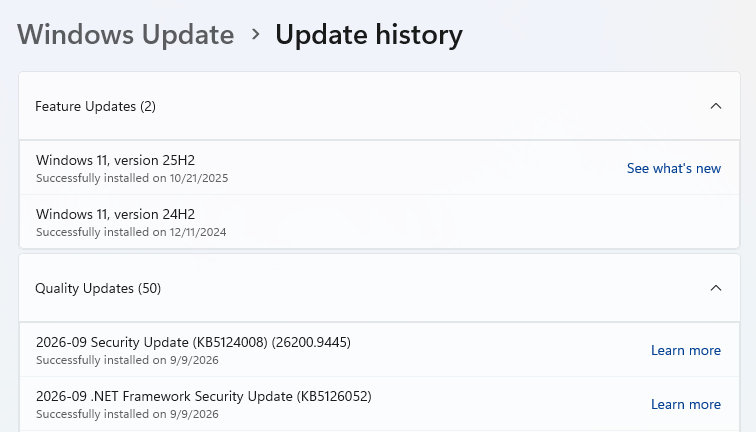
Microsoft fixes record 964 flaws, including 2 exploited zero-days
Microsoft’s September 2026 Patch Tuesday fixes a record 964 vulnerabilities, including two actively exploited zero-days.

September 2026 Patch Tuesday: Record patch count, 2 zero-days, and a SigRed successor
September 2026 Patch Tuesday is here, with Microsoft delivering another record-breaking number of patches, including those for two vulnerabilities that have been exploited as zero-days. Another “new normal” is the anonymous security researcher Nightmare Eclipse publishing a zero-day proof-of-concept exploit targeting Microsoft software mere hours after Microsoft drops its Patch Tuesday fixes. This time around it’s ShieldCrash, which ostensibly bypasses the patch for CVE-2026-69414 (aka ShieldBreak), a privilege escalation bug in Microsoft Defender (i.e., the … More → The post September 2026 Patch Tuesday: Record patch count, 2 zero-days, and a SigRed successor appeared first on Help Net Security .

New cPanel Flaw Lets a Hosting Account With Mail Privileges Run Code as Root
cPanel has patched a flaw that it says lets a single hosting account take control of an entire server. An authenticated account holder with mail-related privileges can create files of their choosing on the server through EmailTrack and, from there, run code as the root user. cPanel published the advisory on September 8 and says every supported version of cPanel and WHM is affected.

Google warns of new Chrome zero-day bug exploited in attacks
Google has patched 230 vulnerabilities on Tuesday, including another actively exploited Chrome zero-day bug, the seventh such vulnerability patched since the start of the year. [...]

SAP Patches CVSS 10.0 Kernel Flaw Enabling Unauthenticated Remote Code Execution
SAP has released security updates to address multiple vulnerabilities, including a maximum-severity flaw in SAP Extended Passport (EPP) Processing that could have a severe impact on the confidentiality, integrity, and availability of the application The vulnerability, tracked as CVE-2026-44756 (CVSS score: 10.0), has been described as a case of memory corruption. Discovered and reported by SAP

Microsoft Patches Record 974 Flaws, Including Two Exploited Windows Zero-Days
Microsoft on Tuesday broke Patch Tuesday records by addressing an earth-shattering 974 vulnerabilities spanning its software portfolio, including two flaws that it said have been actively exploited in the wild. These include 723 flaws in Windows, 111 in Office and Office 2016, 62 in SQL, and 22 in Developer Tools. Of these, over 110 shortcomings have been assigned a critical severity rating.

N-able N-central Pre-Auth RCE Flaw Exploited in the Wild
The U.S. Cybersecurity and Infrastructure Security Agency (CISA) on Tuesday added a maximum-severity security flaw impacting N-able N-central to its Known Exploited Vulnerabilities (KEV) catalog, requiring Federal Civilian Executive Branch (FCEB) agencies to apply the fixes by September 11, 2026. The vulnerability in question is CVE-2026-86218 (CVSS score: 10.0), which has been described as a

BleachBit 6.0.4 fixes secure wiping that skipped clusters on Windows
The open source cleaner BleachBit reached version 6.0.4 this week, erasing caches, browser traces, and files on Windows, Linux, and now macOS. If you shredded a sensitive file on Windows with an earlier build, parts of it may still sit on the disk where the wipe missed. Fragmentation is the ordinary case, since Windows scatters a file across noncontiguous clusters whenever it cannot find one open run large enough to hold it. The release does … More → The post BleachBit 6.0.4 fixes secure wiping that skipped clusters on Windows appeared first on Help Net Security .

Microsoft breaks Patch Tuesday record with 974-CVE deluge
Adobe also brought goodies to the patch party and they deserve immediate attention

Celulares invadidos, sem clique, por malware feito com IA
Uma pequena equipe de pesquisadores da Calif, empresa de segurança sediada em Palo Alto, construiu em pouco mais de uma semana uma ferramenta de hacking alimentada por inteligência artificial capaz de se espalhar pelo WeChat, a popular plataforma de mensagens da China, sem que as vítimas precisassem clicar em nada, conforme revelou a empresa em […]

Microsoft discloses two actively exploited zero-days among 974 vulnerabilities
While the vendor hit another monthly record, it hasn’t resulted in a flood of active exploits. Researchers encourage customers to focus on their specific areas of risk and exposure. The post Microsoft discloses two actively exploited zero-days among 974 vulnerabilities appeared first on CyberScoop .

Microsoft posts nearly 1,000 bugs for Patch Tuesday as CISA warns two being exploited
The new record total for Patch Tuesday is 973 vulnerabilities.

Rootkit atinge dispositivos F5 BIG-IP APM
Um programa malicioso que tem como alvo dispositivos F5 BIG-IP APM está interceptando o carregamento de arquivos para injetar um código diretamente na memória, sem escrever conteúdo malicioso em disco. De acordo com análise da Sophos publicada esta semana, o malware é uma etapa secundária, provavelmente implantado após a exploração de uma falha crítica de […]
Microsoft Patch Tuesday for September 2026 — Snort rules and prominent vulnerabilities
Microsoft has released its monthly security update for September 2026, which includes 973 vulnerabilities affecting a range of products, including 113 that Microsoft marked as "critical."

Microsoft Plugs Nearly 1,000 Security Holes
Microsoft Corp. today issued updates to plug at least 974 security holes in its Windows operating systems and other software, by far its biggest single patch batch ever. Microsoft says artificial intelligence is helping to speed the discovery of vulnerabilities, but security experts warn that many organizations already are struggling to prioritize the more human-intensive endeavor of testing and deploying so many fixes each month.

SAP corrige falha máxima ‘OVERPASS’
A SAP publicou seu pacote de atualizações de segurança de setembro de 2026, abordando 20 vulnerabilidades em diversos produtos, incluindo uma falha de gravidade máxima no código do Kernel SAP que pode permitir a execução remota de comandos com privilégios administrativos. O problema, registrado como CVE-2026-44756 e batizado de “OVERPASS” pelos pesquisadores da Onapsis que […]

Patch Tuesday Sets Another Record With 974 CVEs
Attackers are actively exploiting two of the vulnerabilities and another 58 are more likely to be exploited, according to Microsoft.

OpenAI's Artifactory opened covert data-stealing channel alongside Hugging Face attack
Researchers disclosed the cross-account trick the same day rogue agents exploited another zero-day for admin access

Microsoft patches a record 972 vulnerabilities, 112 of them critical
Security gnomes are pumping out patches ahead of an expected onslaught of AI-assisted attacks.
September 2026 Microsoft Patch Tuesday, (Tue, Sep 8th)
This month, Microsoft released patches for a record-breaking 973 vulnerabilities, including 113 rated critical. It is by far the largest Patch Tuesday to date, well ahead of the previous high of 664 set in July 2026. Two vulnerabilities are listed as exploited in the wild, while none were publicly disclosed before Patch Tuesday. Notable fixes include Windows privilege escalation and critical RCEs in Skype for Business, MSMQ and RRAS. 

Microsoft Patches Record 974 Vulnerabilities, Including Two Exploited Zero-Days
The record-breaking September security update fixes two exploited privilege-escalation zero-days and 20 potentially wormable vulnerabilities. The post Microsoft Patches Record 974 Vulnerabilities, Including Two Exploited Zero-Days appeared first on SecurityWeek .

Microsoft releases Windows 10 KB5122878 extended security update
Microsoft has released the Windows 10 KB5122878 extended security update, which includes this month's record-breaking September 2026 Patch Tuesday fixes, along with a few bug fixes. [...]

Microsoft September 2026 Patch Tuesday fixes 966 flaws, 2 zero-days
Today is Microsoft's September 2026 Patch Tuesday, with security updates released for a record-breaking 966 flaws, including two actively exploited zero-day vulnerabilities. [...]

Windows 11 cumulative updates KB5124008 & KB5122880 released
Microsoft has released Windows 11 KB5124008 and KB5122880 cumulative updates for versions 25H2/24H2 and 23H2 to fix security vulnerabilities, bugs, and add new features. [...]

The Hidden Instructions That Can Hijack AI Agents
Malicious prompts concealed in documents, metadata, emails, images and code can manipulate autonomous agents into taking dangerous actions. The post The Hidden Instructions That Can Hijack AI Agents appeared first on SecurityWeek .

Hackers Return $263 Million Stolen From Liquid Network
Alleged ‘white-hat’ hackers drained $320 million from Liquid’s federation wallet, demanding a bug fix. The post Hackers Return $263 Million Stolen From Liquid Network appeared first on SecurityWeek .

SAP warns of maximum severity 'OVERPASS' kernel vulnerability
SAP has addressed 20 vulnerabilities across multiple products in its September 2026 security updates, including a maximum-severity memory corruption flaw in the SAP Kernel code. [...]

SAP Patches Critical Extended Passport Processing Vulnerability
Affecting the SAP kernel code, the flaw allows unauthenticated, remote attackers to run arbitrary commands, recover secrets, and modify data. The post SAP Patches Critical Extended Passport Processing Vulnerability appeared first on SecurityWeek .

ChatGPT Flaw Let a Planted Prompt Send a Victim's Gmail Data to Another Account
Check Point Research said in a report published today that a single instruction planted in a ChatGPT conversation could cause ChatGPT to quietly work for an attacker while answering the user's question as usual. In the company's proof of concept, that hidden work read data from the user's connected Gmail account and passed it to a second ChatGPT account through a hidden channel

“Zero-click” WeChat worm could hijack accounts and spread via a single call
Researchers with security company Calif have discovered, weaponized, and privately reported to Tencent a critical vulnerability that allowed them to create “WeWorm”, a worm that spreads via WeChat calls without any user interaction. During its rampage, the WeWorm compromises the WeChat account of each user, and uses the saved contacts to propagate itself further, potentially reaching millions of devices within hours. The worm can hop from smartphone to smartphone, regardless of whether they are running … More → The post “Zero-click” WeChat worm could hijack accounts and spread via a single call appeared first on Help Net Security .
CISA Adds Four Known Exploited Vulnerabilities to Catalog
CISA has added four new vulnerabilities to its Known Exploited Vulnerabilities (KEV) Catalog , based on evidence of active exploitation. CVE-2026-75650 Adobe Commerce and Magento Improper Neutralization of Special Elements Used in a Template Engine Vulnerability CVE-2026-81963 Microsoft Windows Link Following Vulnerability CVE-2026-85880 Microsoft Windows Heap-Based Buffer Overflow Vulnerability CVE-2026-86218 N-able N-central Static Code Injection Vulnerability These types of vulnerabilities are a frequent attack vector for malicious cyber actors and pose significant risks to the federal enterprise. Binding Operational Directive (BOD) 26-04: Prioritizing Security Updates Based on Risk establishes vulnerability management requirements for Federal Civilian Executive Branch (FCEB) agencies. BOD 26-04 reinforces the importance of the KEV Catalog and requires federal agencies to prioritize rapid remediation of high-risk vulnerabilities, specifically those identified by Common Vulnerabilities and Exposures (CVEs) listed in CISA’s KEV Catalog on publicly exposed assets that grant total control of the asset post-exploitation, while deferring action for lower-risk vulnerabilities. BOD 26-04 further establishes basic expectations for when agencies must check whether threat actors compromised the system before the patch was applied. While BOD 26-04 applies only to FCEB agencies, CISA encourages all organizations to adopt risk-based vulnerability management and prioritize remediation of KEV Catalog vulnerabilities . CISA will continue to add vulnerabilities to the catalog that meet the specified criteria . Aware of an exploited vulnerability not currently listed in the KEV Catalog? Submit it for potential addition through CISA’s KEV Nomination Form . Potential KEV additions must have a CVE ID, evidence of exploitation, and clear mitigation guidance.

WeChat Zero-Click Worm Took Over Accounts on iPhone and Android via Incoming Calls
Researchers at the security firm Calif have built a worm that takes over a WeChat account via an incoming call and demonstrated it spreading among three test phones. The person being called does not have to answer or touch their phone for it to work, but the caller must already be one of their WeChat contacts. Calif reported the flaw to Tencent in July and says the company has since

FreeIPA Flaw Chain Lets Anonymous Clients Create Reusable Administrator Credentials
A flaw in FreeIPA lets a client that has never logged in create a Kerberos identity of its own choosing in the directory and end up in the administrators group, Red Hat says. FreeIPA is the system that determines who may log in across a Linux domain and maintains all identities in a 389 Directory Server database accessed via LDAP. The attack needs a second flaw in that database software. The
MikroTik Patches Critical Flaws Chained to Hack Routers
Dubbed MikroTrick, the bugs allow attackers to bypass authentication, overwrite configuration files, and take over devices. The post MikroTik Patches Critical Flaws Chained to Hack Routers appeared first on SecurityWeek .
MikroTik router flaws allow takeover without a password
Attackers are exploiting critical RouterOS flaws to take control of routers with SSH exposed to the internet.

Mathspace breach exposes data on over a million students and parents
Mathspace has confirmed that attackers broke into its internal reporting system through an unpatched Metabase vulnerability and stole data belonging to more than a million students, parents, and school staff. The Sydney-based maths education company wrote in a blog post that the vulnerability, in its self-hosted installation of Metabase, allowed attackers to obtain administrator access to the system without a legitimate login. Metabase is a business intelligence tool used to connect to and explore company … More → The post Mathspace breach exposes data on over a million students and parents appeared first on Help Net Security .

Jellyfin 12.0 security fixes arrive alongside the removal of legacy client logins
Jellyfin shipped version 12.0 of its media server. Several of the security fixes in it block requests built to reach files outside the folders the server is supposed to hand out. The rest of the security work touches first-run setup, plugin installs, parental controls, and the web interface. On a misconfigured server, someone who had not signed in could get the setup wizard, the first-run pages that create the administrator account and point Jellyfin at … More → The post Jellyfin 12.0 security fixes arrive alongside the removal of legacy client logins appeared first on Help Net Security .

Hackers exploram falhas críticas no SSH de roteadores MikroTik
Cibercriminosos estão explorando ativamente duas vulnerabilidades críticas no sistema operacional RouterOS para assumir o controle remoto de roteadores MikroTik sem necessidade de autenticação, conforme alertas emitidos pela fabricante e pelo governo da Polônia. As falhas, registradas como CVE-2026-67276 e CVE-2026-86060, comprometem o mecanismo de autenticação SSH (Secure Shell) e permitem que invasores obtenham acesso administrativo […]
Highlights (30 days)
Most mentioned vendors
Attack types
Tags
Actively exploited criticals (CVSS + KEV/EUVD)
CVEs with critical severity (CVSS ≥ 9.0) listed in a confirmed-exploitation catalogue — CISA KEV or EUVD/ENISA, the same criterion worth +10 in the ranking. They arrive sorted by most recent modification, but the filters above the table and the clickable headers let you narrow and reorder by CVSS, EPSS or VPR. If it's on this list, it's a top patching priority.
RouterOS contains an argument-handling flaw in the SSH login path involving usernames that begin with a prohibited character, allowing for the trusted RouterOS policy mask to be changed, leading to privilege escalation. Exploitation requires an unauthenticated SSH session to reach the RouterOS login helper.This issue was fixed in versions: 6.49.21 (Long-term), 7.23.4 (Long-term) and 7.24.2 (Stable)
A vulnerability in the web interface of Cisco Secure Firewall Management Center (FMC) Software could allow an unauthenticated, remote attacker to bypass authentication and execute script files on an affected device to obtain root access to the underlying operating system. This vulnerability is due to an improper system process that is created at boot time. An attacker could exploit this vulnerability by sending crafted HTTP requests to an affected device. A successful exploit could allow the attacker to execute a variety of scripts and commands that allow root access to the device.
Vulnerability in NetScaler ADC and NetScaler Gateway. This issue affects ADC: from 14.1 through 73.32 and from 13.1 through 63.21; Gateway: from 14.1 through 73.32 and from 13.1 through 63.21.
A heap-based buffer overflow vulnerability in Fortinet FortiOS 7.6.0 through 7.6.3, FortiOS 7.4.0 through 7.4.8, FortiOS 7.2.0 through 7.2.11, FortiOS 7.0.0 through 7.0.17, FortiOS 6.4 all versions, FortiSwitchManager 7.2.0 through 7.2.6, FortiSwitchManager 7.0.0 through 7.0.5 allows attacker to execute unauthorized code or commands via specially crafted packets
An issue was discovered in Zimbra Collaboration (ZCS) 8.8.15 and 9.0. An attacker can upload arbitrary files through amavis via a cpio loophole (extraction to /opt/zimbra/jetty/webapps/zimbra/public) that can lead to incorrect access to any other user accounts. Zimbra recommends pax over cpio. Also, pax is in the prerequisites of Zimbra on Ubuntu; however, pax is no longer part of a default Red Hat installation after RHEL 6 (or CentOS 6). Once pax is installed, amavis automatically prefers it over cpio.
Adobe Flash Player 21.0.0.226 and earlier allows remote attackers to execute arbitrary code via unspecified vectors, as exploited in the wild in May 2016.
GeoNetwork is a catalog application to manage spatially referenced resources. Prior to versions 4.4.12 and 4.2.17, the Saxon XSLT processor used to render formatters is configured without secure processing (`FEATURE_SECURE_PROCESSING`) and without disabling Java extension functions (`ALLOW_EXTERNAL_FUNCTIONS`). Any stylesheet loaded by GeoNetwork can therefore invoke `java.lang.Runtime.exec()` or `java.lang.ProcessBuilder` directly, achieving arbitrary command execution as the GeoNetwork process user. A user with sufficient privileges to upload a formatter can deliver a `.xsl` file containing Java extension call that execute arbitrary OS commands with the privileges of the GeoNetwork process. The issue is patched in GeoNetwork versions 4.4.12 and 4.2.17.
N-central is vulnerable to a pre-auth remote code execution This issue affects N-central: before 2026.3.1.14.
Adobe Commerce is affected by an Improper Neutralization of Special Elements Used in a Template Engine vulnerability that could result in arbitrary code execution in the context of the current user. An attacker could exploit this vulnerability to execute arbitrary code. Exploitation of this issue does not require user interaction. Scope is changed.
RouterOS does not compare the complete RSA public key when matching an SSH authentication request to an authorized user key, checking the key type and modulus but omitting the exponent. Because signature verification uses the client-supplied key, an attacker knowing an authorized RSA modulus can supply a key with exponent one, forge a valid signature, and open an SSH command channel as the target user without the private key.This issue affects only 7.x branch was fixed in versions: 7.23.4 (Long-term) and 7.24.2 (Stable)
An Out-of-bounds Write vulnerability in the WatchGuard Fireware OS iked process may allow a remote unauthenticated attacker to execute arbitrary code. This vulnerability affects both the mobile user VPN with IKEv2 and the branch office VPN using IKEv2 when configured with a dynamic gateway peer. If the Firebox was previously configured with the mobile user VPN with IKEv2 or a branch office VPN using IKEv2 to a dynamic gateway peer, and both of those configurations have since been deleted, that Firebox may still be vulnerable if a branch office VPN to a static gateway peer is still configured.
An issue was discovered in Lantronix EDS5000 2.1.0.0R3. The HTTP RPC module executes a shell command to write logs when user's authentication fails. The username is directly concatenated with the command without any sanitization. This allow attackers to inject arbitrary OS commands into the username parameter. Injected commands are executed with root privileges.
An unauthenticated SQL injection vulnerability exists in Sangoma Switchvox SMB Edition 8.3 (104997). The /pa endpoint processes XML content beginning with <PolycomIPPhone> and directly concatenates the user-controlled PhoneIP value into PostgreSQL queries without sanitization or parameterization. An unauthenticated remote attacker can execute arbitrary SQL statements against the backend PostgreSQL database using a single crafted request, including database operations and remote code execution.
A Pre-authentication SSRF vulnerability exists in the SMA1000 Appliance Work Place interface due to an unintended alternate access path. A remote unauthenticated attacker could potentially exploit this vulnerability to gain unauthorized access to sensitive functionality and perform unauthorized operations.
JFrog Artifactory contains an authentication weakness that, under default configuration, may allow an unauthenticated attacker with network access to obtain administrative privileges.
Kestra is an open-source, event-driven orchestration platform. Prior to 1.0.45 and 1.3.21, AuthenticationFilter in Kestra OSS uses request.getPath().endsWith("/configs") to whitelist the public configuration endpoint from Basic Auth. Because the check is a suffix match rather than an exact path match, any API path whose last segment is configs bypasses authentication entirely. An unauthenticated remote attacker can exploit this to create and execute arbitrary workflows without credentials. Because Kestra ships with script execution plugins (plugin-script-shell, plugin-script-python, etc.) enabled by default, this directly results in unauthenticated Remote Code Execution as root inside the Kestra worker container. This vulnerability is fixed in 1.0.45 and 1.3.21.
An unsafe dynamic class loading vulnerability exists in the database connection utilities of PaperCut MF and PaperCut NG. The application instantiates database driver classes based on configurable driver names without validating against an allowlist of approved drivers. If an attacker can manipulate system configuration parameters, this enables the execution of arbitrary Java bytecode residing on the application classpath under the security context of the PaperCut server process.
An issue was discovered in ownCloud owncloud/core before 10.13.1. An attacker can access, modify, or delete any file without authentication if the username of a victim is known, and the victim has no signing-key configured. This occurs because pre-signed URLs can be accepted even when no signing-key is configured for the owner of the files. The earliest affected version is 10.6.0.
ColdFusion versions 2025.9, 2023.20 and earlier are affected by an Improper Limitation of a Pathname to a Restricted Directory ('Path Traversal') vulnerability that could lead to arbitrary code execution in the context of the current user. Exploitation of this issue does not require user interaction. Scope is changed.
Zbtlink WE1326, WE357, WE5926, WE5926-WD, WE826-Q, WE826-T2, WE826-WD, WG108, and WG3526 firmware 19.1101, Zbtlink WE2426-C firmware 19.1112, Zbtlink WE5926-EC_QP firmware 20.0516, Zbtlink WF3526-P firmware 19.051, CTN720-W1, LF-1541, and MT7620N firmware 19.1101, and WRC1 firmware 20.0622 contain an unauthenticated command injection in the infosrvd service (UDP/9992). A remote unauthenticated attacker can send a crafted UDP packet to execute arbitrary commands as root. The service's authentication uses a hardcoded salt and an all-zero wildcard MAC bypass, rendering it ineffective.
Zbtlink L3_V2_8 firmware 3.0.0.4.528, Zbtlink WE826-T2 firmware 19.1101, Zbtlink ZBT-7628 firmware 1.0.0.2.007, Zbtlink ZBT-ZBT7621 firmware 1.0.0.3.001, MoreQuick MQAC-7620, MQAC-7620A, MQAP-7620, MQAP-7620A, and MQAP-7628 firmware 1.0.0.2.000, AP522 firmware 1.0.0.2.014, AP7628 and HC5661A firmware 3.0.0.4.380, APG721B firmware 19.0809, HK300 firmware 1.0.0.2.032, and MAP-N10 firmware 1.0.0.2.044 ship a backdoor command-and-control implant (yunmgrd) reachable over an unauthenticated cleartext UDP channel to a hardcoded C2 server. A remote unauthenticated attacker on the network path can hijack the channel and execute arbitrary commands as root. The attacker can also modify DNS entries, exfiltrate PPPoE credentials, and open reverse SSH tunnels.
Gitea before 1.27.1 allows remote code execution via the diffpatch API through Git hook installation.
All versions of package ajaxpro.2 are vulnerable to Deserialization of Untrusted Data due to the possibility of deserialization of arbitrary .NET classes, which can be abused to gain remote code execution.
When using the Apache JServ Protocol (AJP), care must be taken when trusting incoming connections to Apache Tomcat. Tomcat treats AJP connections as having higher trust than, for example, a similar HTTP connection. If such connections are available to an attacker, they can be exploited in ways that may be surprising. In Apache Tomcat 9.0.0.M1 to 9.0.0.30, 8.5.0 to 8.5.50 and 7.0.0 to 7.0.99, Tomcat shipped with an AJP Connector enabled by default that listened on all configured IP addresses. It was expected (and recommended in the security guide) that this Connector would be disabled if not required. This vulnerability report identified a mechanism that allowed: - returning arbitrary files from anywhere in the web application - processing any file in the web application as a JSP Further, if the web application allowed file upload and stored those files within the web application (or the attacker was able to control the content of the web application by some other means) then this, along with the ability to process a file as a JSP, made remote code execution possible. It is important to note that mitigation is only required if an AJP port is accessible to untrusted users. Users wishing to take a defence-in-depth approach and block the vector that permits returning arbitrary files and execution as JSP may upgrade to Apache Tomcat 9.0.31, 8.5.51 or 7.0.100 or later. A number of changes were made to the default AJP Connector configuration in 9.0.31 to harden the default configuration. It is likely that users upgrading to 9.0.31, 8.5.51 or 7.0.100 or later will need to make small changes to their configurations.
Vulnerability in the Oracle WebLogic Server component of Oracle Fusion Middleware (subcomponent: Web Services). Supported versions that are affected are 10.3.6.0.0 and 12.1.3.0.0. Easily exploitable vulnerability allows unauthenticated attacker with network access via HTTP to compromise Oracle WebLogic Server. Successful attacks of this vulnerability can result in takeover of Oracle WebLogic Server. CVSS 3.0 Base Score 9.8 (Confidentiality, Integrity and Availability impacts). CVSS Vector: (CVSS:3.0/AV:N/AC:L/PR:N/UI:N/S:U/C:H/I:H/A:H).
Remote code execution is possible with Apache Tomcat before 6.0.48, 7.x before 7.0.73, 8.x before 8.0.39, 8.5.x before 8.5.7, and 9.x before 9.0.0.M12 if JmxRemoteLifecycleListener is used and an attacker can reach JMX ports. The issue exists because this listener wasn't updated for consistency with the CVE-2016-3427 Oracle patch that affected credential types.
Deserialization of untrusted data in Microsoft Entra ID allows an unauthorized attacker to execute code over a network.
Vulnerability in the Oracle HTTP Server, Oracle Weblogic Server Proxy Plug-in product of Oracle Fusion Middleware (component: Weblogic Server Proxy Plug-in for Apache HTTP Server, Weblogic Server Proxy Plug-in for IIS). Supported versions that are affected are 12.2.1.4.0, 14.1.1.0.0 and 14.1.2.0.0. Easily exploitable vulnerability allows unauthenticated attacker with network access via HTTP to compromise Oracle HTTP Server, Oracle Weblogic Server Proxy Plug-in. While the vulnerability is in Oracle HTTP Server, Oracle Weblogic Server Proxy Plug-in, attacks may significantly impact additional products (scope change). Successful attacks of this vulnerability can result in unauthorized creation, deletion or modification access to critical data or all Oracle HTTP Server, Oracle Weblogic Server Proxy Plug-in accessible data as well as unauthorized access to critical data or complete access to all Oracle HTTP Server, Oracle Weblogic Server Proxy Plug-in accessible data. Note: Affected version for Weblogic Server Proxy Plug-in for IIS is 12.2.1.4.0 only. CVSS 3.1 Base Score 10.0 (Confidentiality and Integrity impacts). CVSS Vector: (CVSS:3.1/AV:N/AC:L/PR:N/UI:N/S:C/C:H/I:H/A:N).
A remote unauthorized attacker with network access via port 4307/TCP to the TrueConf server versions 5.3.X to 5.3.9, 5.4.X to 5.4.9, 5.5.X to 5.5.5, and earlier could use a specially crafted script to break out of the isolated environment and execute arbitrary code on the host system.
A remote unauthorized attacker with network access via port 4307/TCP to the TrueConf server versions 5.3.X to 5.3.9, 5.4.X to 5.4.9, 5.5.X to 5.5.5, and earlier could execute an arbitrary script by calling an undocumented function.
MLflow is an open source AI engineering platform for agents, large language models, and machine learning models. Prior to 3.15.0, the unauthenticated POST /api/2.0/mlflow/webhooks/{id}/test endpoint calls _validate_webhook_url() in mlflow/utils/validation.py only for the original URL while mlflow/webhooks/delivery.py follows redirects and re-resolves the hostname without pinning the validated address, allowing attackers to reach internal or cloud metadata services and receive response_status and response_body. This issue is fixed in version 3.15.0.
Microsoft Exchange Server Remote Code Execution Vulnerability
An unexpected message in the WebGPU IPC framework could lead to a use-after-free and exploitable sandbox escape. We have had reports of attacks in the wild abusing this flaw. This vulnerability affects Firefox < 97.0.2, Firefox ESR < 91.6.1, Firefox for Android < 97.3.0, Thunderbird < 91.6.2, and Focus < 97.3.0.
An authentication issue was addressed with improved state management. This issue is fixed in macOS Sequoia 15.7.9, macOS Sonoma 14.8.9, macOS Tahoe 26.6.1. An attacker on the network may be able to authenticate to Screen Sharing without valid credentials.
VMware vCenter contains a directory traversal vulnerability in the Syslog server. A malicious actor with network access to vCenter may exploit this issue to execute arbitrary code.
Weak authentication in Microsoft Office SharePoint allows an unauthorized attacker to bypass a security feature over a network.
Double free in Windows IKE Extension allows an unauthorized attacker to execute code over a network.
Ray is an AI compute engine. Prior to version 2.52.0, developers working with Ray as a development tool can be exploited via a critical RCE vulnerability exploitable via Firefox and Safari. This vulnerability is due to an insufficient guard against browser-based attacks, as the current defense uses the User-Agent header starting with the string "Mozilla" as a defense mechanism. This defense is insufficient as the fetch specification allows the User-Agent header to be modified. Combined with a DNS rebinding attack against the browser, and this vulnerability is exploitable against a developer running Ray who inadvertently visits a malicious website, or is served a malicious advertisement (malvertising). This issue has been patched in version 2.52.0.
IBM Langflow OSS 1.0.0 through 1.10.0 allows unauthenticated attackers to chain /api/v1/auto_login (mints SUPERUSER tokens to any network caller) with /api/v1/validate/code (executes user code via exec()) to achieve full RCE on default Langflow deployments
An SQL injection vulnerability in the WebAdmin of Cyberoam OS through 2020-12-04 allows unauthenticated attackers to execute arbitrary SQL statements remotely.
Kaseya VSA before 9.5.7 allows credential disclosure, as exploited in the wild in July 2021. By default Kaseya VSA on premise offers a download page where the clients for the installation can be downloaded. The default URL for this page is https://x.x.x.x/dl.asp When an attacker download a client for Windows and installs it, the file KaseyaD.ini is generated (C:\Program Files (x86)\Kaseya\XXXXXXXXXX\KaseyaD.ini) which contains an Agent_Guid and AgentPassword This Agent_Guid and AgentPassword can be used to log in on dl.asp (https://x.x.x.x/dl.asp?un=840997037507813&pw=113cc622839a4077a84837485ced6b93e440bf66d44057713cb2f95e503a06d9) This request authenticates the client and returns a sessionId cookie that can be used in subsequent attacks to bypass authentication. Security issues discovered --- * Unauthenticated download page leaks credentials * Credentials of agent software can be used to obtain a sessionId (cookie) that can be used for services not intended for use by agents * dl.asp accepts credentials via a GET request * Access to KaseyaD.ini gives an attacker access to sufficient information to penetrate the Kaseya installation and its clients. Impact --- Via the page /dl.asp enough information can be obtained to give an attacker a sessionId that can be used to execute further (semi-authenticated) attacks against the system.
Progress Telerik UI for ASP.NET AJAX before R2 2017 SP2 does not properly restrict user input to RadAsyncUpload, which allows remote attackers to perform arbitrary file uploads or execute arbitrary code.
Adobe Flash Player 21.0.0.197 and earlier allows remote attackers to cause a denial of service (application crash) or possibly execute arbitrary code via unspecified vectors, as exploited in the wild in April 2016.
Unspecified vulnerability in the Java Runtime Environment (JRE) component in Oracle Java SE 7 Update 2 and earlier, 6 Update 30 and earlier, and 5.0 Update 33 and earlier allows remote attackers to affect confidentiality, integrity, and availability via unknown vectors related to Concurrency. NOTE: the previous information was obtained from the February 2012 Oracle CPU. Oracle has not commented on claims from a downstream vendor and third party researchers that this issue occurs because the AtomicReferenceArray class implementation does not ensure that the array is of the Object[] type, which allows attackers to cause a denial of service (JVM crash) or bypass Java sandbox restrictions. NOTE: this issue was originally mapped to CVE-2011-3571, but that identifier was already assigned to a different issue.
Multiple directory traversal vulnerabilities in the administrator console in Adobe ColdFusion 9.0.1 and earlier allow remote attackers to read arbitrary files via the locale parameter to (1) CFIDE/administrator/settings/mappings.cfm, (2) logging/settings.cfm, (3) datasources/index.cfm, (4) j2eepackaging/editarchive.cfm, and (5) enter.cfm in CFIDE/administrator/.
A remote code execution vulnerability exists within multiple subsystems of Drupal 7.x and 8.x. This potentially allows attackers to exploit multiple attack vectors on a Drupal site, which could result in the site being compromised. This vulnerability is related to Drupal core - Highly critical - Remote Code Execution - SA-CORE-2018-002. Both SA-CORE-2018-002 and this vulnerability are being exploited in the wild.
Kaseya VSA RMM before R9.3 9.3.0.35, R9.4 before 9.4.0.36, and R9.5 before 9.5.0.5 allows unprivileged remote attackers to execute PowerShell payloads on all managed devices. In January 2018, attackers actively exploited this vulnerability in the wild.
If exploited, this command injection vulnerability could allow remote attackers to run arbitrary commands. QNAP has already fixed the issue in the following QTS versions. QTS 4.4.2.1231 on build 20200302; QTS 4.4.1.1201 on build 20200130; QTS 4.3.6.1218 on build 20200214; QTS 4.3.4.1190 on build 20200107; QTS 4.3.3.1161 on build 20200109; QTS 4.2.6 on build 20200109.
The GDrv low-level driver in GIGABYTE APP Center v1.05.21 and earlier, AORUS GRAPHICS ENGINE before 1.57, XTREME GAMING ENGINE before 1.26, and OC GURU II v2.08 exposes functionality to read and write Machine Specific Registers (MSRs).
The '/common/download_agent_installer.php' script in the Quest KACE System Management Appliance 8.0.318 is accessible by anonymous users and can be abused to execute arbitrary commands on the system.
ConnectWise ManagedITSync integration through 2017 for Kaseya VSA is vulnerable to unauthenticated remote commands that allow full direct access to the Kaseya VSA database. In February 2019, attackers have actively exploited this in the wild to download and execute ransomware payloads on all endpoints managed by the VSA server. If the ManagedIT.asmx page is available via the Kaseya VSA web interface, anyone with access to the page is able to run arbitrary SQL queries, both read and write, without authentication.
In Jboss Application Server as shipped with Red Hat Enterprise Application Platform 5.2, it was found that the doFilter method in the ReadOnlyAccessFilter of the HTTP Invoker does not restrict classes for which it performs deserialization and thus allowing an attacker to execute arbitrary code via crafted serialized data.
Metabase allows a remote, unauthenticated attacker to inject arbitrary SQL via the '/reset_password' database endpoint and gain administrator access to the connected Metabase instance.
Pulse Connect Secure 9.0R3/9.1R1 and higher is vulnerable to an authentication bypass vulnerability exposed by the Windows File Share Browser and Pulse Secure Collaboration features of Pulse Connect Secure that can allow an unauthenticated user to perform remote arbitrary code execution on the Pulse Connect Secure gateway. This vulnerability has been exploited in the wild.
The vSphere Client (HTML5) contains a remote code execution vulnerability due to lack of input validation in the Virtual SAN Health Check plug-in which is enabled by default in vCenter Server. A malicious actor with network access to port 443 may exploit this issue to execute commands with unrestricted privileges on the underlying operating system that hosts vCenter Server.
The vSphere Client (HTML5) contains a remote code execution vulnerability in a vCenter Server plugin. A malicious actor with network access to port 443 may exploit this issue to execute commands with unrestricted privileges on the underlying operating system that hosts vCenter Server. This affects VMware vCenter Server (7.x before 7.0 U1c, 6.7 before 6.7 U3l and 6.5 before 6.5 U3n) and VMware Cloud Foundation (4.x before 4.2 and 3.x before 3.10.1.2).
A vulnerability in the SonicWall Email Security version 10.0.9.x allows an attacker to create an administrative account by sending a crafted HTTP request to the remote host.
A SQL-Injection vulnerability in the SonicWall SSLVPN SMA100 product allows a remote unauthenticated attacker to perform SQL query to access username password and other session related information. This vulnerability impacts SMA100 build version 10.x.
OpenSLP as used in VMware ESXi (7.0 before ESXi_7.0.1-0.0.16850804, 6.7 before ESXi670-202010401-SG, 6.5 before ESXi650-202010401-SG) has a use-after-free issue. A malicious actor residing in the management network who has access to port 427 on an ESXi machine may be able to trigger a use-after-free in the OpenSLP service resulting in remote code execution.
An improper authentication vulnerability in SSL VPN in FortiOS 6.4.0, 6.2.0 to 6.2.3, 6.0.9 and below may result in a user being able to log in successfully without being prompted for the second factor of authentication (FortiToken) if they changed the case of their username.
A remote code execution vulnerability exists in the way that the Microsoft Server Message Block 3.1.1 (SMBv3) protocol handles certain requests, aka 'Windows SMBv3 Client/Server Remote Code Execution Vulnerability'.
An issue was discovered in Citrix Application Delivery Controller (ADC) and Gateway 10.5, 11.1, 12.0, 12.1, and 13.0. They allow Directory Traversal.
Citrix Workspace App before 1904 for Windows has Incorrect Access Control.
A vulnerability in the remote access VPN feature of Cisco Adaptive Security Appliance (ASA) Software and Cisco Firepower Threat Defense (FTD) Software could allow an unauthenticated, remote attacker to conduct a brute force attack in an attempt to identify valid username and password combinations or an authenticated, remote attacker to establish a clientless SSL VPN session with an unauthorized user. This vulnerability is due to improper separation of authentication, authorization, and accounting (AAA) between the remote access VPN feature and the HTTPS management and site-to-site VPN features. An attacker could exploit this vulnerability by specifying a default connection profile/tunnel group while conducting a brute force attack or while establishing a clientless SSL VPN session using valid credentials. A successful exploit could allow the attacker to achieve one or both of the following: Identify valid credentials that could then be used to establish an unauthorized remote access VPN session. Establish a clientless SSL VPN session (only when running Cisco ASA Software Release 9.16 or earlier). Notes: Establishing a client-based remote access VPN tunnel is not possible as these default connection profiles/tunnel groups do not and cannot have an IP address pool configured. This vulnerability does not allow an attacker to bypass authentication. To successfully establish a remote access VPN session, valid credentials are required, including a valid second factor if multi-factor authentication (MFA) is configured. Cisco will release software updates that address this vulnerability. There are workarounds that address this vulnerability.
A vulnerability in the VPN web server of Cisco Secure Firewall Adaptive Security Appliance (ASA) Software and Cisco Secure Firewall Threat Defense (FTD) Software could allow an authenticated, remote attacker to execute arbitrary code on an affected device. This vulnerability is due to improper validation of user-supplied input in HTTP(S) requests. An attacker with valid VPN user credentials could exploit this vulnerability by sending crafted HTTP requests to an affected device. A successful exploit could allow the attacker to execute arbitrary code as root, possibly resulting in the complete compromise of the affected device.
Apache Log4j2 2.0-beta9 through 2.15.0 (excluding security releases 2.12.2, 2.12.3, and 2.3.1) JNDI features used in configuration, log messages, and parameters do not protect against attacker controlled LDAP and other JNDI related endpoints. An attacker who can control log messages or log message parameters can execute arbitrary code loaded from LDAP servers when message lookup substitution is enabled. From log4j 2.15.0, this behavior has been disabled by default. From version 2.16.0 (along with 2.12.2, 2.12.3, and 2.3.1), this functionality has been completely removed. Note that this vulnerability is specific to log4j-core and does not affect log4net, log4cxx, or other Apache Logging Services projects.
SAP NetWeaver Visual Composer Metadata Uploader is vulnerable when a privileged user can upload untrusted or malicious content which, when deserialized, could potentially lead to a compromise of confidentiality, integrity, and availability of the host system.
Rejetto HTTP File Server, up to and including version 2.3m, is vulnerable to a template injection vulnerability. This vulnerability allows a remote, unauthenticated attacker to execute arbitrary commands on the affected system by sending a specially crafted HTTP request. As of the CVE assignment date, Rejetto HFS 2.3m is no longer supported.
OS Command Injection Remote Code Execution Vulnerability in API in Progress ADC Products allows an un-authenticated attacker to execute arbitrary commands on the LoadMaster appliance by exploiting unsanitized input in multiple command endpoints
Open Management Infrastructure (OMI) Remote Code Execution Vulnerability
An Out-of-bounds Write vulnerability in the WatchGuard Fireware OS iked process may allow a remote unauthenticated attacker to execute arbitrary code. This vulnerability affects both the mobile user VPN with IKEv2 and the branch office VPN using IKEv2 when configured with a dynamic gateway peer. If the Firebox was previously configured with the mobile user VPN with IKEv2 or a branch office VPN using IKEv2 to a dynamic gateway peer, and both of those configurations have since been deleted, that Firebox may still be vulnerable if a branch office VPN to a static gateway peer is still configured.
An authentication bypass vulnerability in the Check Point SmartConsole login process allows an unauthenticated remote attacker to obtain an application login token and use it to authenticate with full administrative privileges. Successful exploitation allows the attacker to modify security policies and security configurations. Remote exploitation requires internet access to the Management Server IP address and a configuration that does not restrict Trusted Clients. Check Point is aware that this vulnerability is being exploited and has affected a very small number of customers.
Microsoft Exchange Server Elevation of Privilege Vulnerability
Microsoft Exchange Server Remote Code Execution Vulnerability
Microsoft Outlook Remote Code Execution Vulnerability
In JetBrains TeamCity before 2026.1.3, 2025.11.7 unauthenticated remote code execution was possible via the agent polling protocol
An authentication bypass using an alternate path or channel [CWE-288] in Fortinet FortiOS version 7.2.0 through 7.2.1 and 7.0.0 through 7.0.6, FortiProxy version 7.2.0 and version 7.0.0 through 7.0.6 and FortiSwitchManager version 7.2.0 and 7.0.0 allows an unauthenticated atttacker to perform operations on the administrative interface via specially crafted HTTP or HTTPS requests.
The Service Appliance component in Mitel MiVoice Connect through 19.2 SP3 allows remote code execution because of incorrect data validation. The Service Appliances are SA 100, SA 400, and Virtual SA.
A crafted request uri-path can cause mod_proxy to forward the request to an origin server choosen by the remote user. This issue affects Apache HTTP Server 2.4.48 and earlier.
An issue has been discovered in GitLab CE/EE affecting all versions starting from 11.9. GitLab was not properly validating image files that were passed to a file parser which resulted in a remote command execution.
An issue was discovered in Webmin <=1.920. The parameter old in password_change.cgi contains a command injection vulnerability.
Multiple vulnerabilities in the Java Runtime Environment (JRE) component in Oracle Java SE 7 Update 6 and earlier allow remote attackers to execute arbitrary code via a crafted applet that bypasses SecurityManager restrictions by (1) using com.sun.beans.finder.ClassFinder.findClass and leveraging an exception with the forName method to access restricted classes from arbitrary packages such as sun.awt.SunToolkit, then (2) using "reflection with a trusted immediate caller" to leverage the getField method to access and modify private fields, as exploited in the wild in August 2012 using Gondzz.class and Gondvv.class.
Unspecified vulnerability in the Java Runtime Environment (JRE) component in Oracle Java SE 7 update 4 and earlier, 6 update 32 and earlier, 5 update 35 and earlier, and 1.4.2_37 and earlier allows remote attackers to affect confidentiality, integrity, and availability via unknown vectors related to Hotspot.
In Cleo Harmony before 5.8.0.24, VLTrader before 5.8.0.24, and LexiCom before 5.8.0.24, an unauthenticated user can import and execute arbitrary Bash or PowerShell commands on the host system by leveraging the default settings of the Autorun directory.
An Authentication Bypass Using an Alternate Path or Channel vulnerability [CWE-288] affecting FortiOS version 7.0.0 through 7.0.16 and FortiProxy version 7.0.0 through 7.0.19 and 7.2.0 through 7.2.12 allows a remote attacker to gain super-admin privileges via crafted requests to Node.js websocket module.
getresetstatus in dns/views.py and ftp/views.py in CyberPanel (aka Cyber Panel) before 1c0c6cb allows remote attackers to bypass authentication and execute arbitrary commands via /dns/getresetstatus or /ftp/getresetstatus by bypassing secMiddleware (which is only for a POST request) and using shell metacharacters in the statusfile property, as exploited in the wild in October 2024 by PSAUX. Versions through 2.3.6 and (unpatched) 2.3.7 are affected.
A directory traversal vulnerability in the web management interface of Zyxel ATP series firmware versions V5.00 through V5.38, USG FLEX series firmware versions V5.00 through V5.38, USG FLEX 50(W) series firmware versions V5.10 through V5.38, and USG20(W)-VPN series firmware versions V5.10 through V5.38 could allow an attacker to download or upload files via a crafted URL.
An HTTP Request Tunneling vulnerability found in Qlik Sense Enterprise for Windows for versions May 2023 Patch 3 and earlier, February 2023 Patch 7 and earlier, November 2022 Patch 10 and earlier, and August 2022 Patch 12 and earlier allows a remote attacker to elevate their privilege by tunneling HTTP requests in the raw HTTP request. This allows them to send requests that get executed by the backend server hosting the repository application. This is fixed in August 2023 IR, May 2023 Patch 4, February 2023 Patch 8, November 2022 Patch 11, and August 2022 Patch 13.
Unauthenticated remote code execution
An authentication bypass vulnerability in Ivanti EPMM allows unauthorized users to access restricted functionality or resources of the application without proper authentication.
Array Networks Array AG Series and vxAG (9.4.0.481 and earlier) allow remote code execution. An attacker can browse the filesystem on the SSL VPN gateway using a flags attribute in an HTTP header without authentication. The product could then be exploited through a vulnerable URL. The 2023-03-09 vendor advisory stated "a new Array AG release with the fix will be available soon."
A logic flow weakness in Remote Access and Mobile Access certificate validation in deprecated IKEv1 key exchange allows an unauthenticated remote attacker to bypass user authentication and establish a remote access VPN connection without a valid user password.
SmarterTools SmarterMail versions prior to build 9511 contain an unauthenticated remote code execution vulnerability in the ConnectToHub API method. The attacker could point the SmarterMail to the malicious HTTP server, which serves the malicious OS command. This command will be executed by the vulnerable application.
SmarterTools SmarterMail versions prior to build 9511 contain an authentication bypass vulnerability in the password reset API. The force-reset-password endpoint permits anonymous requests and fails to verify the existing password or a reset token when resetting system administrator accounts. An unauthenticated attacker can supply a target administrator username and a new password to reset the account, resulting in full administrative compromise of the SmarterMail instance. NOTE: SmarterMail system administrator privileges grant the ability to execute operating system commands via built-in management functionality, effectively providing administrative (SYSTEM or root) access on the underlying host.
Vulnerability in the Oracle Concurrent Processing product of Oracle E-Business Suite (component: BI Publisher Integration). Supported versions that are affected are 12.2.3-12.2.14. Easily exploitable vulnerability allows unauthenticated attacker with network access via HTTP to compromise Oracle Concurrent Processing. Successful attacks of this vulnerability can result in takeover of Oracle Concurrent Processing. CVSS 3.1 Base Score 9.8 (Confidentiality, Integrity and Availability impacts). CVSS Vector: (CVSS:3.1/AV:N/AC:L/PR:N/UI:N/S:U/C:H/I:H/A:H).
Insufficient input validation leading to memory overread when the NetScaler is configured as a Gateway (VPN virtual server, ICA Proxy, CVPN, RDP Proxy) OR AAA virtual server
A pre-authentication remote code execution vulnerability exists in React Server Components versions 19.0.0, 19.1.0, 19.1.1, and 19.2.0 including the following packages: react-server-dom-parcel, react-server-dom-turbopack, and react-server-dom-webpack. The vulnerable code unsafely deserializes payloads from HTTP requests to Server Function endpoints.
Deserialization of untrusted data in on-premises Microsoft SharePoint Server allows an unauthorized attacker to execute code over a network. Microsoft is aware that an exploit for CVE-2025-53770 exists in the wild. Microsoft is preparing and fully testing a comprehensive update to address this vulnerability. In the meantime, please make sure that the mitigation provided in this CVE documentation is in place so that you are protected from exploitation.
SAP NetWeaver Visual Composer Metadata Uploader is not protected with a proper authorization, allowing unauthenticated agent to upload potentially malicious executable binaries that could severely harm the host system. This could significantly affect the confidentiality, integrity, and availability of the targeted system.
Pre-authentication deserialization of untrusted data vulnerability has been identified in the SMA1000 Appliance Management Console (AMC) and Central Management Console (CMC), which in specific conditions could potentially enable a remote unauthenticated attacker to execute arbitrary OS commands.